How to Type 因为 and 所以 in Chinese Messages
MandarinReps
10/11/2026
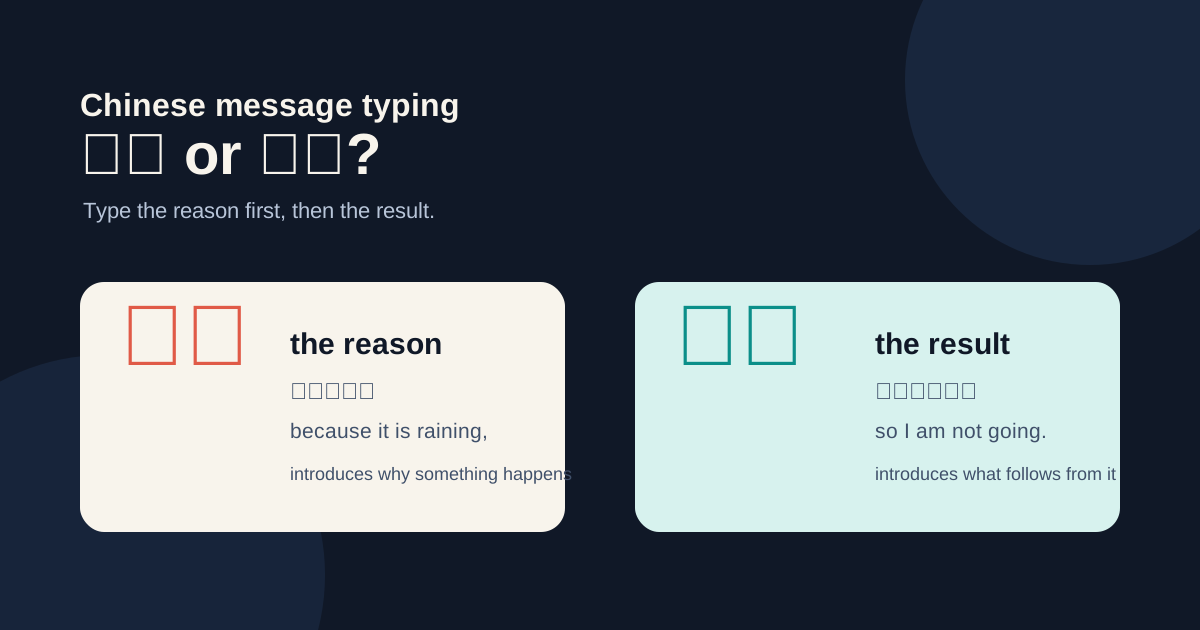
Use 因为 before a reason and 所以 before the result. 因为今天下雨,所以我不去公园。 means "Because it is raining today, I am not going to the park." Chinese usually puts the cause first and the consequence second. For a clear learner message, type the full pair, then check whether the reason, subject, negative marker, and punctuation still say what you intend.
You can leave out one word when the context already supplies it. 因为今天下雨,我不去公园。 is natural, and 今天下雨,所以我不去公园。 is also easy to understand. Keeping 因为...所以... while you practice gives you a visible link between the two clauses. This guide gives HSK 2 to 4 learners a sentence-level way to type that link without relying on an English word order.
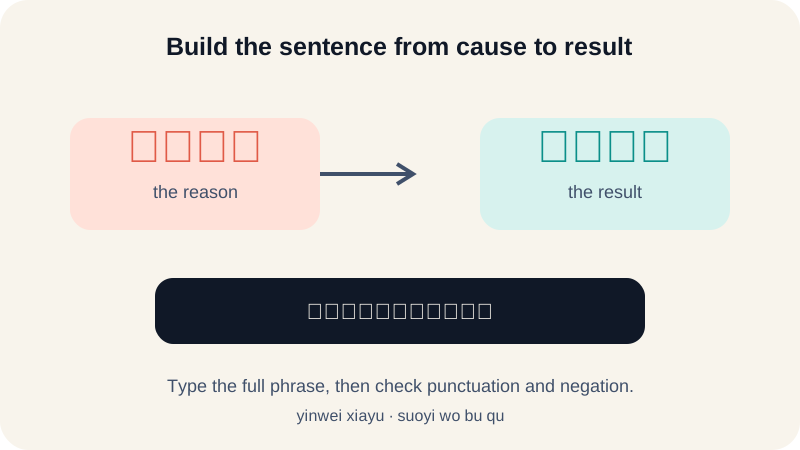
The short answer: reason first, result second
| Message job | Useful learner default | Example | Meaning |
|---|---|---|---|
| Introduce a reason | 因为 | 因为下雨, | Because it is raining, |
| Introduce a result | 所以 | 所以我不去。 | so I am not going. |
| Show both clauses | 因为...所以... | 因为下雨,所以我不去。 | Because it is raining, I am not going. |
| Give a reason after the result | 因为 | 我不去,因为下雨。 | I am not going because it is raining. |
| Answer 为什么 | 因为 | 因为我很累。 | Because I am tired. |
These are learner defaults rather than a rule that every sentence must follow. 因为 answers why or introduces the cause. 所以 points to what follows from that cause. The HSK syllabus helps you build a study list, while complete message practice shows how the words behave in context.
How to use 因为 for the reason
Use 因为 before a clause that explains why something happens:
因为我很累,所以想睡觉。(Because I am tired, I want to sleep.)因为今天很忙,我晚上再回复。(Because I am busy today, I will reply tonight.)我没有去,因为下雨了。(I did not go because it rained.)你为什么不来?因为我在上班。(Why are you not coming? Because I am working.)
In the first two examples, the reason comes before the main result. In the third, the message gives the result first and adds the reason after it. That order is common in short messages because the writer can state the decision and then explain it.
The clause after 因为 can include its own subject, time phrase, or aspect marker. 因为他昨天没来,所以我们很担心。 gives a complete reason. When you type yinwei, select the character from the phrase rather than choosing a candidate after a single syllable. The AllSet Learning guide to 因为 gives additional grammar examples.
How to use 所以 for the result
Use 所以 before the action, decision, or condition that follows from the reason:
我今天很忙,所以不去吃饭了。(I am busy today, so I am not going to eat.)他生病了,所以没有来。(He is sick, so he did not come.)你喜欢中文,所以开始打字练习。(You like Chinese, so you started typing practice.)下班了,所以我现在可以回家。(Work is over, so I can go home now.)
所以 often appears at the start of the result clause, after a comma. The result can be positive, negative, a plan, or a conclusion. The word does not decide the tense by itself. Words such as 昨天, 现在, and 已经 carry time information, while 了, 过, and 着 have their own jobs. The 了, 过, and 着 guide covers those aspect choices.
In conversation, a speaker may begin with 所以 when the reason has already been discussed: 所以我不去了。 means "So I am not going after all." If you use the word without a visible reason, make sure the previous message supplies it.
When 因为 and 所以 appear together
The full pattern makes the relationship easy to see:
因为 + reason, 所以 + result。
| Reason | Result | Complete message |
|---|---|---|
今天下雨 | 我不去公园 | 因为今天下雨,所以我不去公园。 |
我明天要考试 | 今晚要学习 | 因为我明天要考试,所以今晚要学习。 |
他很累 | 他想早点睡 | 因为他很累,所以他想早点睡。 |
你会打字 | 可以多练习句子 | 因为你会打字,所以可以多练习句子。 |
The two clauses need to make a sensible cause-and-result relationship. 因为我喜欢茶,所以今天是星期三 has two grammatical parts, but the reason does not explain the result. Before pressing send, ask whether the second clause actually follows from the first one.
You do not need both words in every sentence. Use the shorter pattern when the meaning stays clear:
因为今天下雨,我不去。(Because it is raining today, I am not going.)今天下雨,所以我不去。(It is raining today, so I am not going.)我不去,因为今天下雨。(I am not going because it is raining today.)
The Chinese punctuation typing guide shows why the Chinese comma , helps separate the reason clause from the result in a message. A full-width comma gives the reader a visible pause before 所以 or before the main result.
A Pinyin candidate routine that works
The Ministry of Education Hanyu Pinyin scheme is the reference for the Romanization system. Type yinwei for 因为 and suoyi for 所以, then include nearby words so the input method has a complete phrase to rank.
- Write the message meaning in two short parts: why, then what happens.
- Type the reason clause, such as
yinwei jintian xiayu. - Type the result clause, such as
suoyi wo bu qu. - Select the complete Chinese phrase from the candidate window.
- Reread the subject, negative marker, time word, and Chinese punctuation.
Apple's guide to using the Chinese candidate window on Mac explains how candidates are selected on macOS. Other keyboards use different layouts, but typing the whole phrase remains useful. If the result feels too strong or too vague, compare it with the 才 and 就 guide, which shows how a small connector can change the timing or consequence of a message.
A five-minute typing drill
Read the English meaning first. Type the Chinese sentence from memory, choose the candidates, and then label the reason and the result.
| Meaning | Target sentence | Pinyin input | Check |
|---|---|---|---|
| Because I am tired, I want to sleep. | 因为我很累,所以想睡觉。 | yinwei wo hen lei suoyi xiang shuijiao | reason: tired; result: want to sleep |
| It is raining today, so I am not going. | 今天下雨,所以我不去。 | jintian xiayu suoyi wo bu qu | result has 不 |
| Because I have work, I will reply tonight. | 因为我要上班,所以晚上回复。 | yinwei wo yao shangban suoyi wanshang huifu | time belongs to the result |
| He was sick, so he did not come. | 他生病了,所以没有来。 | ta shengbing le suoyi meiyou lai | past reason and negative result |
| Why are you late? Because there was traffic. | 你为什么迟到?因为路上堵车。 | ni weishenme chidao yinwei lushang duche | answer starts with 因为 |
| I am not going because it is raining. | 我不去,因为下雨了。 | wo bu qu yinwei xiayu le | result first, reason second |
After the first pass, remove 因为 or 所以 from two sentences and type them again. Then change one detail: turn 今天下雨 into 今天很冷, or turn 我不去 into 我晚点去. The new sentence should still have a clear connection between its two clauses.
For more real-message prompts, use the Chinese typing practice drills. The Mandarin sentence typing guide explains why a complete line gives you a better accuracy check than isolated character recall.
Mistakes to catch before sending
Reversing the English order
English often starts with the result and adds a reason later. Chinese can do that too, but the full learner pattern usually puts 因为 before the reason and 所以 before the result: 因为下雨,所以我不去。 Type the two clauses separately first if the order feels difficult.
Using 因为 for the result
因为 introduces why. In 因为我很累,所以想睡觉, the tiredness is the reason. If you put 因为 before 想睡觉, the sentence no longer shows the intended cause and result clearly.
Adding 所以 without a clear cause
所以 points back to a reason. 所以我不去 works when the conversation already explains why. In a standalone message, add the cause or make the context obvious to the reader.
Forgetting the negative marker
因为下雨,所以我不去 says that rain is the reason for not going. 因为下雨,所以我去 says the opposite result. Read 不, 没, and 没有 before sending. The 不 and 没 guide gives focused practice with those choices.
Treating the pair as a fixed translation
The pair is a useful pattern, but context decides whether one word can be omitted. 我不去,因为下雨了 is a complete message. Keep both words when you need to make the relationship easy for a learner or a reader who has little context.
Choosing candidates from one syllable
The input method cannot decide the intended clause from yinwei or suoyi alone. Type yinwei jintian xiayu suoyi wo bu qu, then select the phrase and inspect the result. The surrounding words also help you catch a wrong character that sounds similar.
Limits of this shortcut
These patterns cover common HSK 2 to 4 messages. Longer sentences can place the reason after the result, use several clauses, or omit both connectors when the relationship is obvious. Spoken Chinese also relies on pauses and shared context that a short text message may not show.
When the logic still feels uncertain, write the two ideas as separate sentences first. Confirm that the second sentence really follows from the first, then combine them with 因为 and 所以 if the connection helps the reader. The 也 and 都 guide offers another example of checking the sentence job before choosing a short Hanzi word.
FAQ
Can I use 因为 without 所以?
Yes. 因为今天下雨,我不去公园 is natural and clear. The reason comes first, and the result follows after the comma. Learners often keep the full pair while practicing because it makes the two jobs easier to see.
Can I use 所以 without 因为?
Yes, when the reason is already known or appears in the previous message. 所以我不去了 means "So I am not going after all." In a standalone message, include the reason if the reader cannot infer it.
Does Chinese always put the reason first?
No. 我不去,因为下雨了 puts the result first and adds the reason after it. The reason-first pattern is a useful default for a complete explanation, especially when you are practicing 因为...所以....
What is the difference between 因为 and 所以?
因为 introduces the cause or explanation. 所以 introduces the action, decision, or conclusion that follows from it. In 因为我很累,所以想睡觉, being tired is the reason and wanting to sleep is the result.
Do I need a comma before 所以?
Use the Chinese comma , when it helps separate the reason clause from the result: 因为下雨,所以我不去。 Short messages may omit punctuation, but the comma makes the relationship easier to scan.
How do I type 因为 and 所以 in Pinyin?
Type yinwei for 因为 and suoyi for 所以. Include the surrounding words, such as yinwei wo hen lei suoyi xiang shuijiao, then select the complete phrase and check the final punctuation.