How to Type 不 and 没 in Chinese Messages
MandarinReps
10/8/2026
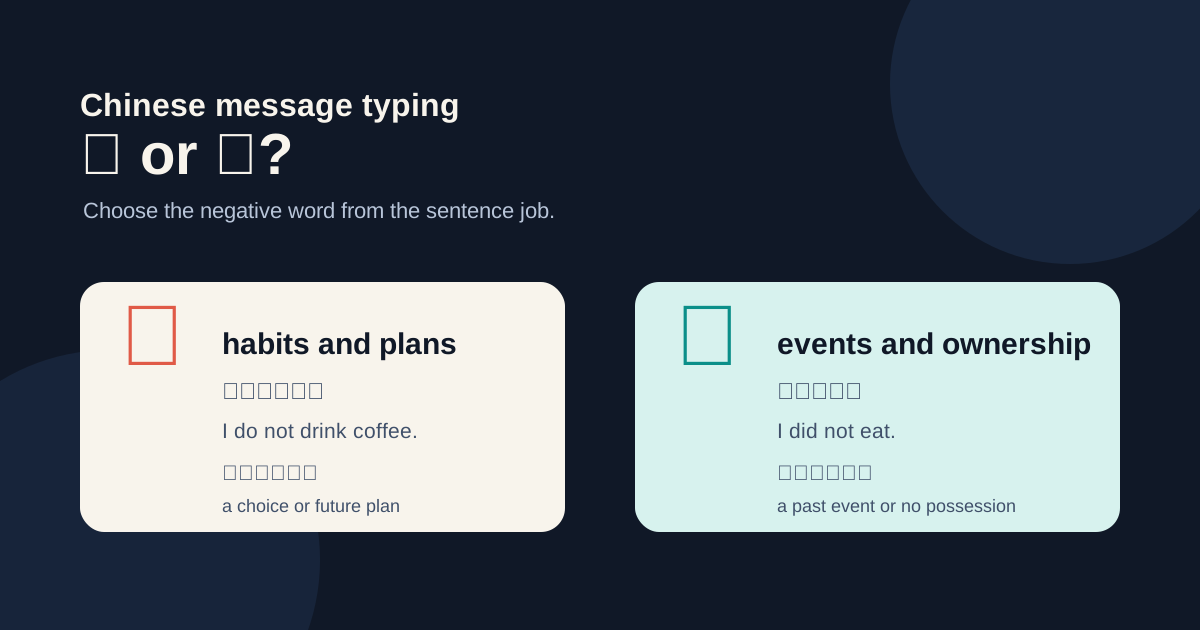
Use 不 for a habit, a present judgment, or a choice about the future. Use 没 or 没有 for something that did not happen, has not happened yet, or is not possessed. Compare 我不吃辣。 (I do not eat spicy food) with 我没吃辣。 (I did not eat spicy food). The first describes a habit or preference. The second describes one event.
English often uses "not" for both meanings, so the Pinyin candidate window cannot make this decision for you. The rest of the sentence supplies the clue. This guide gives HSK 2 to 4 learners a practical way to choose the character, type the full phrase, and check a message before sending it.
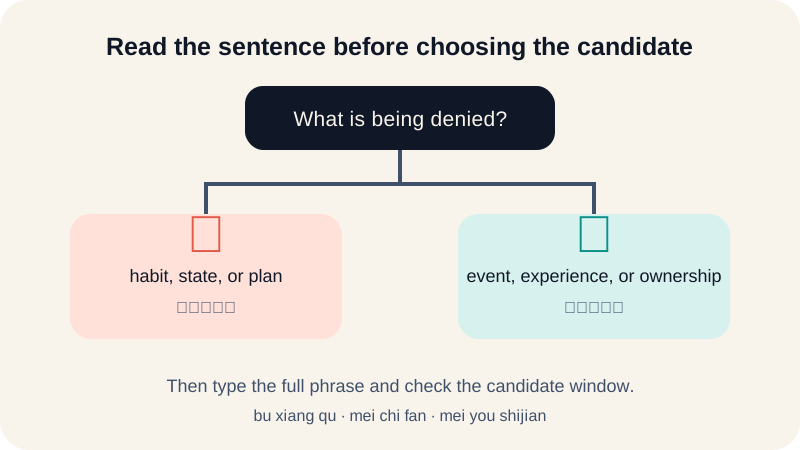
The short answer: what is being denied?
| Message job | Useful learner default | Example | Meaning |
|---|---|---|---|
| A habit or preference | 不 | 我不喝咖啡。 | I do not drink coffee. |
| A current judgment or state | 不 | 这不难。 | This is not difficult. |
| A present or future plan | 不 | 我明天不去。 | I am not going tomorrow. |
| A completed event | 没 | 我没吃饭。 | I did not eat. |
| An event that has not happened yet | 还没 | 我还没收到。 | I have not received it yet. |
| Possession or existence | 没有 | 我没有时间。 | I do not have time. |
| Past experience | 没 + verb + 过 | 我没看过。 | I have never seen it. |
These are learner defaults rather than a complete list of every negative pattern. The HSK syllabus is useful when you build a study set, but it does not turn every sentence into a one-to-one English translation. Read the verb, time expression, and aspect together.
How to use 不
Use 不 before a verb, adjective, or identity phrase when the message describes a regular pattern, a current opinion, or a choice that has not happened yet:
我不抽烟。(I do not smoke.)我不喜欢下雨天。(I do not like rainy days.)这不贵。(This is not expensive.)我不想买。(I do not want to buy it.)我明天不去。(I am not going tomorrow.)
The word can also describe a current location or state, as in 我不在家。 (I am not at home.) and 我不知道。 (I do not know.) The time reference can be understood from the message, so a sentence with 不 does not always need a word such as "usually" or "tomorrow."
Identity uses the familiar pattern 不是: 这不是我的。 (This is not mine.) The negative form of 有 is a common exception for learners. Say 没有 for possession or existence, as in 我没有车。 Do not build 不有车 by translating each English word separately.
Commands also use patterns related to 不, such as 不要 and 别: 不要着急。 means "Do not worry," and 别忘了。 means "Do not forget." These forms need their own practice. They are useful reminders that sentence role matters more than the single English word "not."
How to use 没 and 没有
Use 没 before a verb when an event did not occur or has not occurred. It often points to a particular situation, a completed time period, or an unfinished expectation:
我没吃早饭。(I did not eat breakfast.)他没来。(He did not come.)我没收到你的消息。(I did not receive your message.)我还没写完。(I have not finished writing yet.)
Use 没有 with 有 to say that someone does not have something or that something is absent:
我没有时间。(I do not have time.)这里没有咖啡。(There is no coffee here.)她没有哥哥。(She does not have an older brother.)
For past experience, use 没 with 过: 我没去过中国。 means "I have never been to China." The word 过 marks the experience, while 没 denies that the experience happened. A sentence such as 我没去中国。 usually points to a particular trip or plan that did not happen.
The phrase 还没 means "not yet": 我还没决定。 (I have not decided yet.) It leaves the possibility open that the action will happen later. This small word is common in messages about replies, meals, homework, travel, and appointments.
Compare the pairs before you press send
| Sentence | What the negative word changes | Natural reading |
|---|---|---|
我不吃肉。 | A habit or diet choice | I do not eat meat. |
我没吃肉。 | One meal or event | I did not eat meat. |
我不想去。 | Current desire or plan | I do not want to go. |
我没去。 | A past or expected trip | I did not go. |
我不看这部电影。 | A choice or regular refusal | I do not watch this film. |
我没看这部电影。 | One viewing event | I did not watch this film. |
我没去过北京。 | Life experience | I have never been to Beijing. |
我没有时间。 | Possession or availability | I do not have time. |
The English translations can look similar while the Chinese message points to a different time or situation. When you see a past time such as 昨天 or a result such as 收到, 没 is often the first candidate to check. When the message states a preference or a plan such as 明天, 不 is usually the clearer starting point.
A Pinyin candidate routine that works
The Ministry of Education Hanyu Pinyin scheme is the reference for the Romanization system. Your device's input method then turns the letters into candidate Hanzi. It does not know whether you mean a habit, a completed event, or possession.
- Read the whole sentence and identify the job of the negative phrase.
- Type the surrounding words, such as
bu xiang qu,mei chi fan, ormei you shijian. - Choose the full phrase from the candidate list. Do not accept the first result for
buormeiautomatically. - Reread the time word, verb, and final punctuation before sending.
Apple's guide to using the Chinese candidate window on Mac explains the selection step on macOS. Other keyboards use different layouts, but the sentence-level habit is the same. The guide on fixing wrong Pinyin characters shows why a plausible candidate can still be wrong in the finished sentence.
A five-minute typing drill
Read the English meaning first. Type the Chinese sentence from memory, select the characters, and then say why the sentence uses 不, 没, or 没有.
| Meaning | Target sentence | Pinyin input | Reason |
|---|---|---|---|
| I do not drink coffee. | 我不喝咖啡。 | wo bu he kafei | habit or preference |
| I did not eat breakfast. | 我没吃早饭。 | wo mei chi zaofan | completed event |
| I do not want to go today. | 我今天不想去。 | wo jintian bu xiang qu | current plan or desire |
| I have not received the file yet. | 我还没收到文件。 | wo hai mei shoudao wenjian | unfinished event |
| I do not have time. | 我没有时间。 | wo meiyou shijian | possession or availability |
| I have never been to Beijing. | 我没去过北京。 | wo mei quguo beijing | past experience |
After the first pass, change one detail and type the sentence again. Turn 我不喝咖啡 into 我没喝咖啡 and explain that the meaning changes from a general habit to one occasion. Turn 我没收到文件 into 我还没收到文件 and notice how 还 changes the message from a report to an unfinished expectation.
For more sentence-level prompts, use the Chinese typing practice drills. The Mandarin sentence typing guide explains why a complete line gives you a better accuracy check than isolated character recall.
Mistakes to catch before sending
Using 没 for a future plan
If tomorrow has not arrived, type 我明天不去。 for "I am not going tomorrow." After the day has passed, 我昨天没去。 reports that the trip did not happen. Time reference changes the useful negative form.
Using 不 for one completed event
我不吃饭 can describe a habit or a refusal. If you mean that you skipped one meal, use 我没吃饭。 Add 还 when the person has not eaten yet: 我还没吃饭。
Writing 不有 for possession
Use 没有 with 有: 我没有钱。 and 这里没有座位。 The input method may show 不 quickly when you type bu, but the sentence pattern tells you to choose 没 or 没有.
Losing the difference between 不想 and 没想
我不想问老师。 means "I do not want to ask the teacher." 我没问老师。 means "I did not ask the teacher." A negative desire and a negative event are different messages, even when the English conversation makes them sound close.
Typing only bu or mei
The sounds have many possible candidates. Type bu xiang mai, mei you shijian, or the entire message before selecting. The Chinese typing guide for 会, 能, and 可以 uses the same method for another group of English "can" translations.
Limits of this shortcut
The patterns here cover common HSK 2 to 4 messages. Spoken Mandarin, fixed expressions, aspect, and context can change the best choice. 不 and 没 also appear in longer structures that need separate study, including result complements and contrastive sentences.
When a message still feels unclear, keep the surrounding words visible and compare a complete example in a dictionary or class reference. The 了, 过, and 着 guide is useful when the negative word interacts with aspect markers.
FAQ
Can 不 and 没 replace each other?
Usually not. 不 commonly describes a habit, a current judgment, or a future choice. 没 commonly denies a completed or unfinished event, an experience, or possession. A changed negative word can change the time or situation in the message.
How do I say "not yet"?
Use 还没 before the verb: 我还没回复。 means "I have not replied yet." The phrase says the action is unfinished and may happen later. 我不回复 sounds like a choice, habit, or refusal to reply.
Why is it 没有时间 instead of 不有时间?
有 uses 没有 for a negative possession or existence statement. Type 我没有时间。 and 这里没有人。 as complete phrases. Memorizing the pattern is more useful than translating the English word "not" character by character.
What is the difference between 没去 and 没去过?
没去 usually refers to a particular trip or plan that did not happen. 没去过 denies the experience of ever going. The character 过 adds the experience meaning.
How do I type 不 and 没 in Pinyin?
Type bu for 不 and mei for 没, then include the words around them before selecting a candidate. For example, type wo bu xiang qu for 我不想去 and wo mei chi fan for 我没吃饭. Read the completed sentence once before sending it.