How to Type 才 and 就 in Chinese Messages
MandarinReps
9/28/2026
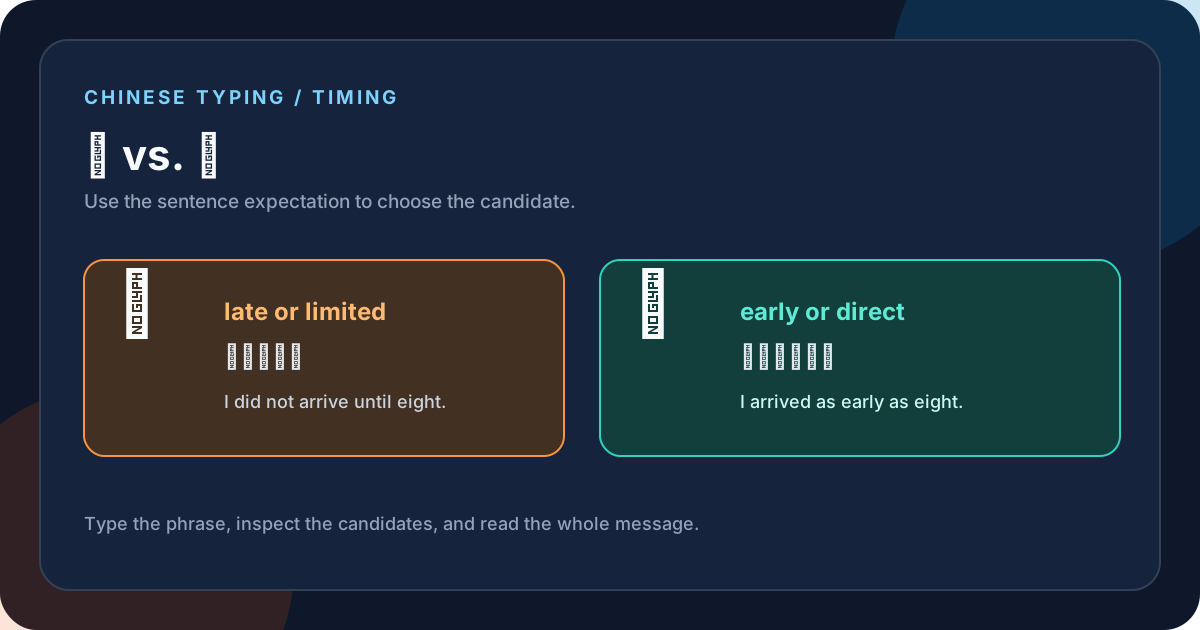
When a Chinese message uses 才 or 就, start with the timing. 才 often presents a result as late, limited, or reached only after a condition. 就 often presents a result as early, quick, or directly connected to what came before. Compare 我八点才到 (I did not arrive until eight) with 我八点就到了 (I arrived as early as eight).
In a Pinyin input method, type the whole clause before choosing a candidate: wo ba dian cai dao or wo ba dian jiu dao. The letters cai can produce 才, 菜, or 猜; jiu can produce 就, 酒, or 旧. The surrounding words tell you which character belongs in the message.
These are practical defaults for HSK 2 to 4 sentence output. Both words have other uses, and the speaker’s expectation can change the tone. Use the examples as a first check, then read the complete sentence before sending it.
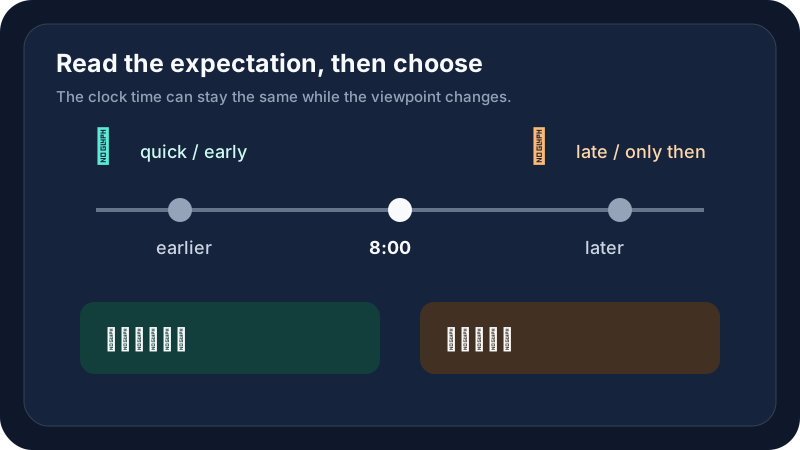
The short answer: ask when the result happened
| Character | Useful first question | Message example | Meaning |
|---|---|---|---|
才 | Did the result happen later, or only after a limit or condition? | 我八点才到。 | I did not arrive until eight. |
就 | Did the result happen early, quickly, or right after something? | 我八点就到了。 | I arrived as early as eight. |
The clock time is the same in both examples. The speaker’s viewpoint changes. 才 makes eight feel late or like a minimum point. 就 makes eight feel early or sooner than expected.
This timing check also works with a condition:
下课以后我才回家。(I only go home after class.)下课以后我就回家。(I go home right after class.)
Type the time, condition, and verb together when possible. A longer phrase gives the candidate window more context and gives you a sentence to review.
How to use 才 in a message
A result that happened late
Use 才 when the result came later than the speaker expected or wanted:
我昨天晚上才看到你的消息。(I only saw your message last night.)他十点才起床。(He did not get up until ten.)公交车刚才才来。(The bus only came just now.)
The sentence does not simply report a time. It points out that the time was late from the speaker’s perspective. 才 can therefore sound like an explanation or a mild complaint, depending on the context.
A small amount or a young age
才 can also mark a surprisingly small quantity or age:
他才三岁。(He is only three.)这才五块钱。(This is only five yuan.)我才学了两个月。(I have studied for only two months.)
Here the word limits the number, price, or duration. Type the quantity with the rest of the sentence so you can check whether 才 means “only” in this sense.
A condition that must happen first
With a condition, 才 can mean “only then”:
你告诉我,我才知道。(I only know when you tell me.)吃完饭我才去。(I will go only after I finish eating.)
The first clause sets a gate for the second clause. The message may describe a plan, a requirement, or a result that has not happened yet.
How to use 就 in a message
A result that happened early or quickly
Use 就 when the result happened sooner than expected or with little delay:
我七点就到了。(I arrived as early as seven.)她吃完饭就走了。(She left as soon as she finished eating.)你这么快就做完了?(You finished so quickly?)
The word can make a time feel early or connect two events closely. In a question, the speaker may be surprised by the speed.
A direct condition or planned sequence
就 commonly links a condition to the next action:
你到了就给我发消息。(Message me when you arrive.)下课以后我就回家。(I will go home after class.)如果你有时间,我们就一起吃饭。(If you have time, we will eat together.)
In these examples, 就 marks what follows once the condition is met. It does not always mean “early.” The sentence relationship matters more than a single English translation.
A conclusion or recognition
Some short messages use 就 to show that the speaker has reached a conclusion:
我就知道。(I knew it.)那就好。(Then that is good.)你就是小王吧?(You must be Xiao Wang, right?)
These expressions are common in conversation. Learn them as complete chunks so you do not force the time test onto a sentence where 就 is doing another job.
When 才 and 就 appear together
The pair becomes easier when two people or two outcomes are compared:
他八点才到,我八点就到了。
He did not arrive until eight, while I arrived as early as eight.
The first clause treats eight as late. The second treats it as early. The characters are chosen by the speaker’s comparison, not by the clock time alone.
| Situation | Natural sentence | What the speaker adds |
|---|---|---|
| A late arrival | 他九点才来。 | Nine feels late. |
| An early arrival | 他九点就来。 | Nine feels early or soon. |
| A required condition | 你说我才明白。 | Your explanation must come first. |
| A quick sequence | 你说我就明白了。 | Understanding follows directly. |
The last two sentences show why English translations can mislead. Both describe understanding after an explanation, but 才 stresses the requirement and 就 stresses the direct result.
How to choose the Pinyin candidate
Use this short loop whenever cai or jiu produces several candidates:
- Read the complete meaning. Decide whether the sentence stresses lateness, a limit, a condition, speed, or a direct result.
- Type more than the syllable. Use
wo cai dao jiaorwo jiu dao jiainstead of stopping atcaiorjiu. - Select the character in context. Choose
才for才到家and就for就到家when the intended meaning matches. - Read the tone of the message.
你才来?can sound like “You only just got here?” while你就走了?can sound like “You are leaving already?”
Apple’s Chinese input method documentation describes the candidate-window method on Mac. The layout varies by device, but the practice is portable: enter the sound, inspect the candidates, and confirm the whole sentence. If the candidate list keeps producing the wrong Hanzi, the guide on fixing wrong Pinyin candidates has a longer recovery loop.
A five-minute typing drill
Cover the target sentence, read the English meaning, and type the Chinese from memory. Then change one time or condition and type the new sentence again.
| Meaning | Target sentence | Pinyin input |
|---|---|---|
| I did not get home until ten. | 我十点才到家。 | wo shi dian cai dao jia |
| I arrived as early as seven. | 我七点就到了。 | wo qi dian jiu dao le |
| He is only three years old. | 他才三岁。 | ta cai san sui |
| Message me when you arrive. | 你到了就给我发消息。 | ni dao le jiu gei wo fa xiaoxi |
| I only understand when you explain it. | 你说我才明白。 | ni shuo wo cai mingbai |
| I understand as soon as you explain it. | 你说我就明白了。 | ni shuo wo jiu mingbai le |
For a broader set of everyday output prompts, use the real-message typing drills. The article on 了, 过, and 着 is useful when the timing question is really about completed events, past experience, or a continuing state.
Mistakes to catch before sending
Treating 才 as a fixed translation
才 often translates as “only” or “not until,” but the important idea is a limit from the speaker’s viewpoint. In 我才学了两个月, it limits the length of study. In 下课以后我才回家, it sets a condition.
Treating 就 as “then” every time
就 can connect two events, mark an early result, or appear in a fixed phrase such as 那就好. Read the whole clause before deciding what the word contributes.
Choosing the first candidate after cai or jiu
菜, 猜, 酒, and 旧 are valid characters with different meanings. The candidate window is only a list of possible matches for a sound. Type the next words and check the sentence slot before accepting one.
Ignoring the speaker’s expectation
八点才到 and 八点就到 share a time but give different information. Ask whether the time feels late or early in this conversation. That expectation often decides the character.
Limits of this shortcut
The examples here cover common HSK 2 to 4 message situations. 才 and 就 also appear in comparisons, quantities, conditions, conclusions, and fixed expressions that need more context. A dictionary example or teacher’s correction is useful when a sentence feels ambiguous.
The 在 and 再 typing guide covers another pair that learners often meet in time and sequence messages. Keep each pair separate while practising, then return to complete sentences where the surrounding words determine the candidate.
FAQ
Is 才 always negative?
No. 才 can explain a late arrival, mark a small amount, or show that one condition must come first. The word can sound neutral in a factual sentence such as 我才学了两个月, or more critical in 你才来?.
Is 就 always positive?
No. 就 often describes an early or direct result, but it can also sound impatient or surprised. In 你就走了?, the speaker may be asking why someone left so soon. Context and punctuation matter.
Can 才 and 就 be used in the same sentence?
Yes. A comparison such as 他八点才到,我八点就到了 uses both words to show two different expectations about the same time. A condition can also contain both when the speaker contrasts a required result with a quick follow-up.
Why does typing cai or jiu show several characters?
Pinyin maps sound to possible Hanzi, so cai and jiu each have several candidates. Type the complete phrase, select the word that fits the meaning, and read the finished message. The sentence-level Pinyin practice guide explains why longer output gives you a better check.