How to Type 了, 过, and 着 in Chinese Messages
MandarinReps
9/26/2026
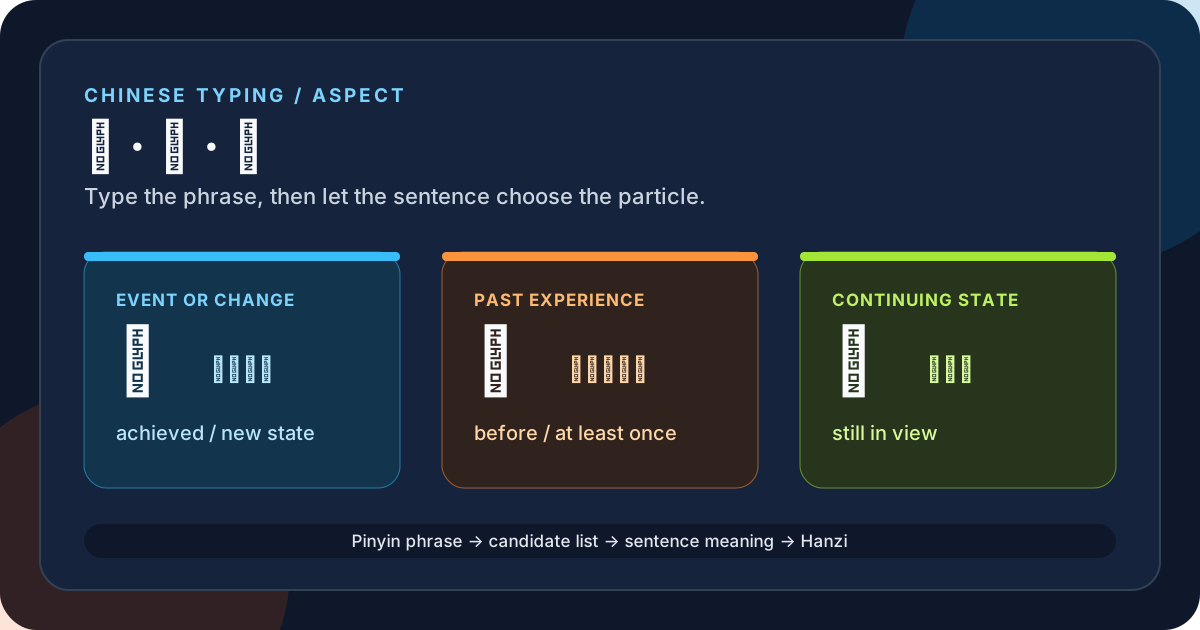
When a Chinese Pinyin input method offers 了, 过, and 着, choose the character from the job it does in the sentence. 了 commonly presents a completed event or a changed situation, 过 marks an experience that happened before, and 着 keeps an action or state in progress. These particles express aspect and sentence viewpoint, so English past tense is not a reliable one-to-one guide.
Type enough of the phrase for the input method to see the context, then choose the candidate and read the complete message. Compare 我吃了饭。 (I ate), 我吃过北京烤鸭。 (I have eaten Beijing roast duck before), and 门开着。 (The door is open). The Pinyin syllables are short, but the surrounding words tell you which Hanzi belongs there.
This guide uses practical defaults for HSK 2 to 4 learners. Chinese aspect has more detail than a three-row rule can show, especially with sentence-final 了, duration phrases, and different verb types. Use the rules as a typing decision you can test in a real message.
The short answer: three jobs to keep separate
| Particle | Useful default | Message example | Typing question |
|---|---|---|---|
了 | A completed event or a new situation | 我看了电影。 | Did the event reach an endpoint, or did the situation change? |
过 | An experience that happened before | 我看过这部电影。 | Have I had this experience at least once? |
着 | An action or state that continues | 门开着。 | Is the action or state still in place? |
These are working questions rather than a complete grammar description. Central China Normal University research describes 了, 着, and 过 as aspect markers whose meanings depend on sentence conditions. Use the pattern first, then check the candidate.
How to type 了 in a message
The most useful beginner pattern is verb + 了 + object:
我买了咖啡。I bought coffee.她看了那个视频。She watched that video.我们吃了午饭。We ate lunch.
In these examples, 了 follows the verb and presents the event as achieved in the message context. The sentence supplies the calendar details.
The same character can appear at the end of a sentence to show a new situation:
下雨了。It has started raining.我不忙了。I am no longer busy.他回来了。He has come back.
For typing practice, keep these two patterns separate at first. Type wo mai le kafei and xia yu le as complete phrases, rather than entering le by itself and accepting the first candidate. The Ministry of Education's GB/T 16159-2012 Chinese Pinyin standard also distinguishes a verb followed by the dynamic particle from sentence-final 了 when it shows Pinyin word spacing. Its examples include kànzhe, jìnxíngguò, and the separately written sentence-final kàn le.
A useful comparison: 了 after the verb or at the end
| Pattern | Example | What the message focuses on |
|---|---|---|
| Verb + 了 + object | 我写了邮件。 | The writing event |
| Clause + sentence-final 了 | 我现在有空了。 | A new situation now holds |
The two 了 patterns do different work. Start with them separately and learn combined forms from examples or teacher feedback.
How to type 过 for past experience
Use 过 when the message says that someone has had an experience before. The experience may have happened once or several times:
我去过上海。I have been to Shanghai.你看过这个电影吗?Have you seen this movie?我没吃过臭豆腐。I have never eaten stinky tofu.
The sentence usually cares about whether the experience exists in the person's history. The exact date can be missing. Add a time expression when the date matters: 我去年去了上海。 focuses on a trip last year, while 我去过上海。 reports the experience.
As a typing check, test 过 when the message answers “Have you ever done this?” Test 了 when it reports one event in a particular situation. Read the whole sentence before sending it, because both particles can appear with the same verb in different messages.
For example:
| Meaning | Chinese message | Particle |
|---|---|---|
| I read this book. | 我看了这本书。 | 了 presents this reading event |
| I have read this book before. | 我看过这本书。 | 过 records the experience |
| I did not read this book. | 我没看这本书。 | 没 marks the negative event |
| I have never read this book. | 我没看过这本书。 | 没 + 过 denies the experience |
A 2013 Central China Normal University study analyses the different aspect meanings and sentence conditions of 着, 了, and 过. That supports using the sentence contrast instead of one English past label for all three.
How to type 着 for an ongoing action or state
着 usually keeps an action or state in view. It can describe an action in progress, a posture, or a state that remains after an action:
他看着手机。He is looking at his phone.门开着。The door is open.墙上挂着一张照片。A photo is hanging on the wall.
The last two examples describe a continuing state. A phrase such as 正在看 can also show an action in progress, but 正在 and 着 are different sentence choices. Learn each one inside a complete phrase.
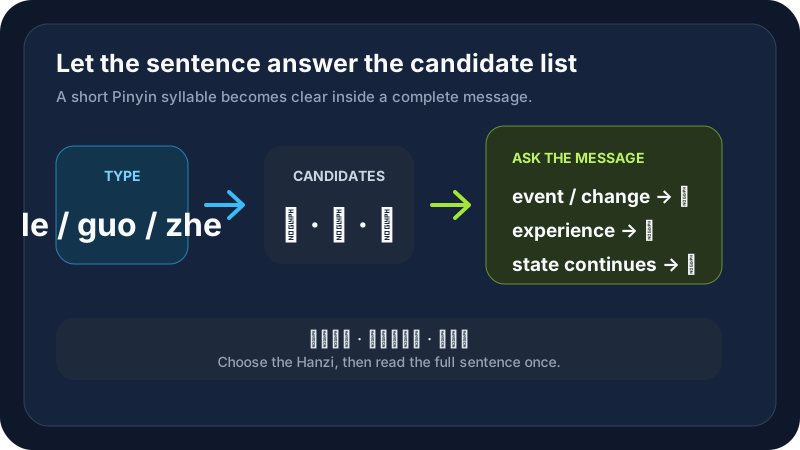
When you type zhe, the candidate list may also include 这, 者, and other characters. Begin with the phrase, such as men kai zhe, then select 着. Its interpretation depends on the verb and the sentence around it.
Avoid using 着 as a universal replacement for “is doing.” Ask what stays in view: the action, a posture, or a resulting state. If you are simply reporting one completed action, return to the 了 and 过 questions.
Why the Pinyin candidate can be wrong
An IME converts sound input into possible Hanzi. Apple's Chinese and Cantonese Input Method guide describes a candidate window that shows possible characters for an input code. The keyboard matches sound; the sentence supplies meaning.
Use this correction loop:
- Type the full word or short phrase.
- Keep the Pinyin composition active until the phrase gives the IME more context.
- Choose 了, 过, or 着 only after checking the sentence role.
- Read the finished message once, including the time phrase and object.
- If the sentence still feels uncertain, compare it with an example using the other particle.
This is the same context-first habit used when a Pinyin IME produces a plausible wrong Hanzi. The candidate-selection guide for Chinese typing covers the broader repair loop, while this article narrows it to aspect particles.
A five-minute typing routine
Use meaning as the prompt and hide the Chinese answer before you type. That adds the retrieval step missing from simple copying and fits the real-message typing drills used elsewhere in this journal.
- Read the English prompt once and recall the Chinese sentence.
- Type the whole sentence with your normal Chinese input source.
- Select the particle from the sentence meaning, then check word order, Hanzi, and punctuation.
- Retype the same sentence after a short break without looking at the answer.
Try these six drills:
| Prompt | Answer | Check |
|---|---|---|
| I bought a ticket. | 我买了票。 | One completed purchase |
| Have you been to Beijing? | 你去过北京吗? | Previous experience |
| The light is on. | 灯亮着。 | A state continues |
| It has become cold. | 天气冷了。 | A new situation |
| I have never tried it. | 我没试过。 | No previous experience |
| He is holding a book and talking. | 他拿着书说话。 | A continuing accompanying state |
If the keyboard keeps offering the wrong candidate, add the next word instead of fighting the one syllable. The Chinese Pinyin setup guide explains how to verify that the correct input source is active on Windows, Mac, iPhone, and Android.
Common mistakes to catch before sending
Treating 了 as a universal past tense
了 can present an achieved event, a new state, or another context-dependent reading. Use the sentence pattern and the surrounding time words. The sentence-final example 我不忙了 describes a change now, so a simple English past label would hide the useful meaning.
Using 过 for one specific finished event
我看过这本书 reports previous experience. If the message is about the reading event in a particular situation, 我看了这本书 is usually the better first comparison. A date or a finished task often points you toward that event-focused reading.
Using 着 whenever English says “is”
着 keeps an action or state in view. It needs a phrase that supports that continuing viewpoint. The sentence 我在看书 says I am reading now, while 我看着书 focuses on the act of looking at the book. They can fit different contexts.
Limits of this shortcut
The three-question method helps with ordinary messages and HSK 2 to 4 sentence practice. Verb type, duration phrases, negation, sentence-final particles, and fixed words can change what sounds natural, so use a grammar reference or teacher when two readings remain plausible. For a wider practice plan, combine this drill with sentence-level Mandarin typing practice: recall the meaning, type the phrase, choose the Hanzi, and review it later.
FAQ
Is 了 the Chinese past tense?
No single English tense maps to every use of 了. It often presents an event as achieved or marks a changed situation, while a time expression supplies the calendar reference. Compare 我昨天去了北京 with 我不忙了: the first reports a trip, and the second reports a current change.
Can 了 and 过 appear with the same verb?
Yes, in different sentences they give different viewpoints. 我看了这部电影 focuses on a reading or viewing event. 我看过这部电影 says the experience is part of the speaker's history. Learn the surrounding phrase rather than memorising a translation for each particle.
Why does the Pinyin input show several characters for zhe?
Pinyin represents sound, so zhe can match more than one Hanzi. Type a longer phrase such as men kai zhe, then use the sentence meaning to select 着. The same candidate-window habit works for le and guo.
Should I type tone marks for these particles?
Most everyday Chinese IMEs accept plain letters such as le, guo, and zhe. Tone marks belong to printed Pinyin and pronunciation study; they are usually separate from the keyboard input step. Focus on the sentence and candidate selection first.
Sources
- GB/T 16159-2012 Chinese Pinyin standard, Ministry of Education of the People's Republic of China.
- “着”“了”“过”时体意义的对立及其句法条件, Central China Normal University language research centre.
- 汉语“了”字教学研究, East China Normal University.
- Chinese and Cantonese Input Method User Guide, Apple Support.
- HSK 3.0 syllabus hub, Chinese Tests Service Website.