How to Type 给 in Chinese Messages
MandarinReps
10/19/2026
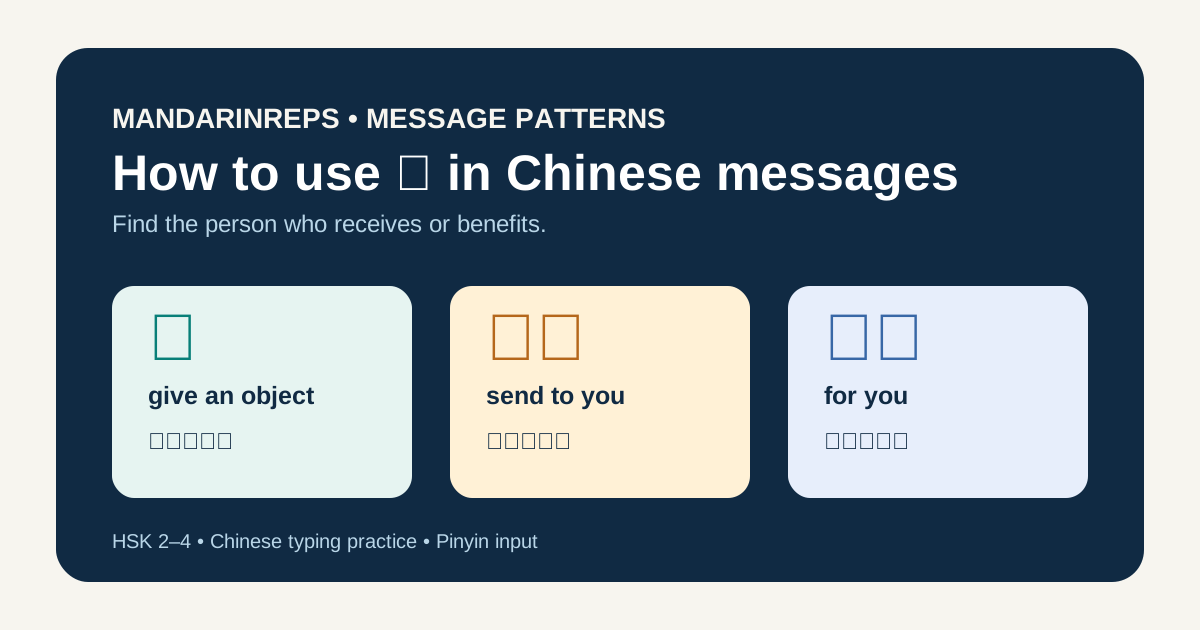
Use 给 (gěi) when a message names the person who receives something or benefits from an action. In digital Chinese, a common pattern is subject + 给 + person + verb/object: 我给你发文件。 (I will send you the file.) 给 can also be the main verb "to give": 我给你一本书。 (I give you a book.) It can mark who something is for: 这个礼物是给你的。 (This gift is for you.)
The position of 给 matters. English uses "to" and "for" in several different ways, while Chinese keeps the recipient close to 给. This guide shows HSK 2 to 4 learners how to type the useful message patterns, choose the right Pinyin candidate, and check whether the sentence names an object, a recipient, or a beneficiary.
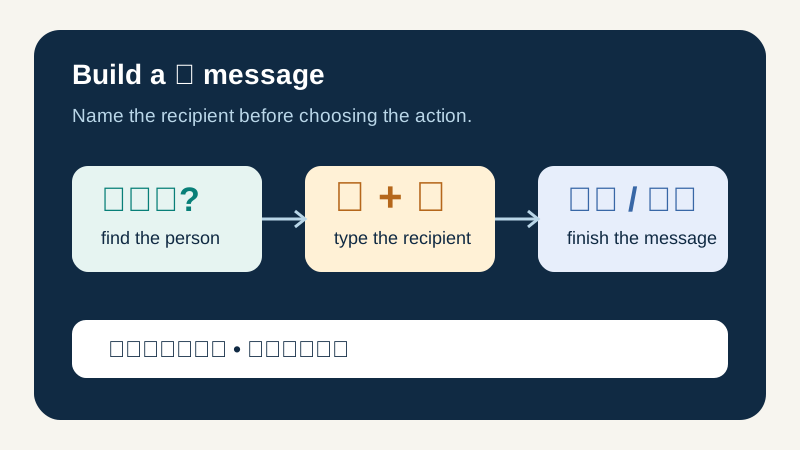
The short answer: give, send, call, or do something for someone
| Message job | Useful learner pattern | Example | Meaning |
|---|---|---|---|
| Give someone an object | 给 + person + object | 我给你一本书。 | I give you a book. |
| Send something to someone | 给 + person + verb | 我给你发文件。 | I will send you the file. |
| Call someone | 给 + person + verb | 我给妈妈打电话。 | I call my mother. |
| Ask for an action | 给 + person + verb | 给我看一下。 | Let me see it for a moment. |
| Name a beneficiary | 是给 + person | 这是给你的。 | This is for you. |
| Buy or prepare for someone | 给 + person + verb | 我给你买咖啡。 | I will buy coffee for you. |
These patterns cover common messages. In the first row, 给 is the main verb. In the other rows, it marks the person who receives the result of another action. Read the full phrase before selecting a Hanzi candidate.
Use 给 as the verb "to give"
When 给 means "to give," the sentence usually names a person and an object:
老师给我一本书。(The teacher gives me a book.)我给你一杯水。(I give you a cup of water.)他给朋友一张照片。(He gives a friend a photo.)
The recipient comes directly after 给, followed by the thing being given. A quantity phrase such as 一本书, 一杯水, or 一张照片 makes the object clear.
The same structure works in a message about sending something:
我给你发一张照片。(I will send you a photo.)我给你写一封邮件。(I will write you an email.)
Here, 发 and 写 describe the action. 给你 identifies the recipient. The English translation may use "to," but the Chinese pattern still places the person after 给 and before the action or object.
Use 给 before a recipient in digital messages
In short digital messages, 给 + person + verb is a practical way to show who receives the action:
我给你发定位。(I will send you my location.)我给你转钱。(I will transfer money to you.)我给他打电话。(I will call him.)请给老师写邮件。(Please write an email to the teacher.)我给朋友买票。(I will buy a ticket for my friend.)
The recipient can be a pronoun, a name, a family word, or a role:
| Recipient type | Example | Meaning |
|---|---|---|
| Pronoun | 我给你发消息。 | I will message you. |
| Name | 我给小王打电话。 | I will call Xiao Wang. |
| Family word | 她给妈妈买水果。 | She buys fruit for her mother. |
| Role | 给老师发邮件。 | Send an email to the teacher. |
In a chat, the subject can be omitted when it is obvious:
给你发了文件。(Sent you the file.)给我回个消息。(Send me a reply.)给他说明一下。(Explain it to him briefly.)
The complete subject is useful for practice. The shorter version is common when the conversation already tells the reader who is acting.
Use 给 to show who something is for
Use 是给 + person + 的 when you want to identify the intended recipient:
这个礼物是给你的。(This gift is for you.)这杯咖啡是给老师的。(This coffee is for the teacher.)那张票是给小李的。(That ticket is for Xiao Li.)
You can also place 给 before a person to show who benefits from an action:
我给你买了咖啡。(I bought coffee for you.)他给孩子准备早餐。(He prepares breakfast for the child.)我们给客人留了一个座位。(We saved a seat for the guests.)
The message does not always describe a literal transfer. The person after 给 can be the one who receives an item, a message, a call, or a helpful action.
Compare 给你发 and 发给你
Both of these patterns can describe sending something to someone:
我给你发文件。我把文件发给你。
The first puts the recipient after 给 before the sending action. The second puts the file after 把 and uses 发给你 to show its destination. Use the first pattern when you want a simple recipient-first message. Use the second when the file is already the focus of the conversation.
| Message focus | Chinese message | What comes first |
|---|---|---|
| Recipient | 我给你发文件。 | You, the recipient |
| Object | 我把文件发给你。 | The file, the object |
| Completed result | 文件已经发给你了。 | The file and its result |
| Intended beneficiary | 这个文件是给你的。 | The person it is for |
The 把 guide gives more practice with object-first messages. The 了, 过, and 着 guide helps you mark whether the sending action has already happened.
A Pinyin candidate routine that works
The Ministry of Education Hanyu Pinyin scheme is the reference for the Romanization system. Standard Chinese keyboards usually let you type Pinyin without tone marks, so the surrounding sentence supplies much of the context.
- Identify the recipient or beneficiary:
ni,ta,laoshi, or a name. - Choose the action:
fa xiaoxi,da dianhua,xie youjian, ormai kafei. - Type the complete phrase, such as
wo gei ni fa wenjian. - Select
给from the candidate list and inspect the rest of the sentence. - Check the recipient, verb, object, aspect marker, and punctuation before sending.
Apple's guide to using the Chinese candidate window on Mac explains how to choose a character from the candidate list. Other keyboards use different layouts, but the sentence routine is the same. Typing gei alone can produce 给, 哥, 各, or 歌. Typing wo gei ni fa wenjian gives the input method and your own eyes more context.
The 一点 and 一下 guide includes short requests such as 给我看一下. Keep the action after the recipient visible while you practise, then shorten the message when the context is clear.
A five-minute typing drill
Read the English meaning first. Type the Chinese from memory, choose the candidates, and mark the recipient or beneficiary.
| Meaning | Target sentence | Pinyin input | Check |
|---|---|---|---|
| I will send you the file. | 我给你发文件。 | wo gei ni fa wenjian | recipient: 你 |
| I sent you a photo. | 我给你发了一张照片。 | wo gei ni fa le yi zhang zhaopian | completed action: 了 |
| Please show me for a moment. | 给我看一下。 | gei wo kan yi xia | recipient: 我 |
| I will call my mother. | 我给妈妈打电话。 | wo gei mama da dianhua | person receiving the call |
| This is for you. | 这是给你的。 | zhe shi gei ni de | intended recipient: 你 |
| Can you buy me coffee? | 你可以给我买咖啡吗? | ni keyi gei wo mai kafei ma | beneficiary: 我 |
After the first pass, change the recipient while keeping the action:
我给你发文件。(I send the file to you.)我给他发文件。(I send the file to him.)我给老师发文件。(I send the file to the teacher.)
Then change the focus to the object: 我把文件发给你。. The event stays similar, but the sentence gives the file a more prominent place.
For more real-message prompts, use the Chinese typing practice drills. The Mandarin sentence typing guide explains why a complete line gives you a better accuracy check than isolated character recall.
Mistakes to catch before sending
Treating 给 as only "to give"
In 我给你发消息, 给 does not mean that the speaker gives a physical object. It marks the person who receives the message. Check the verb after the person.
Putting the recipient in the wrong place
For a simple beginner pattern, use 我给你发文件 rather than translating English word by word. If the file is the focus, use 我把文件发给你. Each pattern gives the reader a different starting point.
Leaving the object unfinished
我给你 can be complete in a context where the action is understood, but it is incomplete for a drill about giving an object. Add the item: 我给你一本书. Add the action when you mean send, call, or write.
Confusing 给 with 跟
我给你打电话 means that I call you. 我跟你说 means that I speak with you or tell you. The two characters may both appear before a person, but their verbs and message jobs differ.
Forgetting the recipient
我发文件 says that I send a file, but it does not name who receives it. Add 给你, 给他, or another recipient when that information matters: 我给你发文件.
Choosing from one syllable
The sound gei has several Hanzi candidates. Type wo gei ni fa wenjian, select 给, and reread the entire message. Do not decide from the first candidate alone.
Limits of this shortcut
These patterns cover common HSK 2 to 4 messages. 给 also appears in formal writing, fixed expressions, and regional spoken patterns. The basic recipient structure is a useful starting point, but longer sentences may use 给 with several verbs, an aspect marker, or an object-first construction.
When the meaning feels unclear, write the message job first: give an item, send something, call someone, or do something for a person. Then type the full Chinese sentence. The 会, 能, and 可以 guide offers another example of choosing a small word from the sentence's purpose instead of from an English translation alone.
FAQ
What does 给 mean in Chinese?
给 can mean "to give," and it can mark the person who receives or benefits from another action. Compare 我给你一本书 with 我给你发文件. The first gives an object. The second sends something to a recipient.
Where does 给 go in a Chinese sentence?
In a common recipient pattern, 给 comes before the person who receives the action: 我给你发照片. When 给 is the main verb, it still comes before the recipient and the object: 我给你一张照片.
What is the difference between 我给你发文件 and 我把文件发给你?
Both can mean that you send the file to the other person. 我给你发文件 introduces the recipient before the verb. 我把文件发给你 makes the file the object of the message and then states its destination.
Can 给 mean "for"?
Yes. In 这是给你的, 给你的 identifies the intended recipient. In 我给你买咖啡, the phrase can mean that the coffee is bought for you. Read the action and the surrounding context.
How do I type 给 in Pinyin?
Type gei, then choose 给 from the candidate window. Include the surrounding words, such as wo gei ni fa wenjian, because gei can also produce 哥, 各, or 歌.
Why can I say 给我看一下?
给我看一下 asks the other person to show something to the speaker for a moment. 给我 identifies the recipient of the viewing action, while 看一下 describes the short action. The 一点 and 一下 guide has more practice with this pattern.