How to Type 一点 and 一下 in Chinese Messages
MandarinReps
10/7/2026
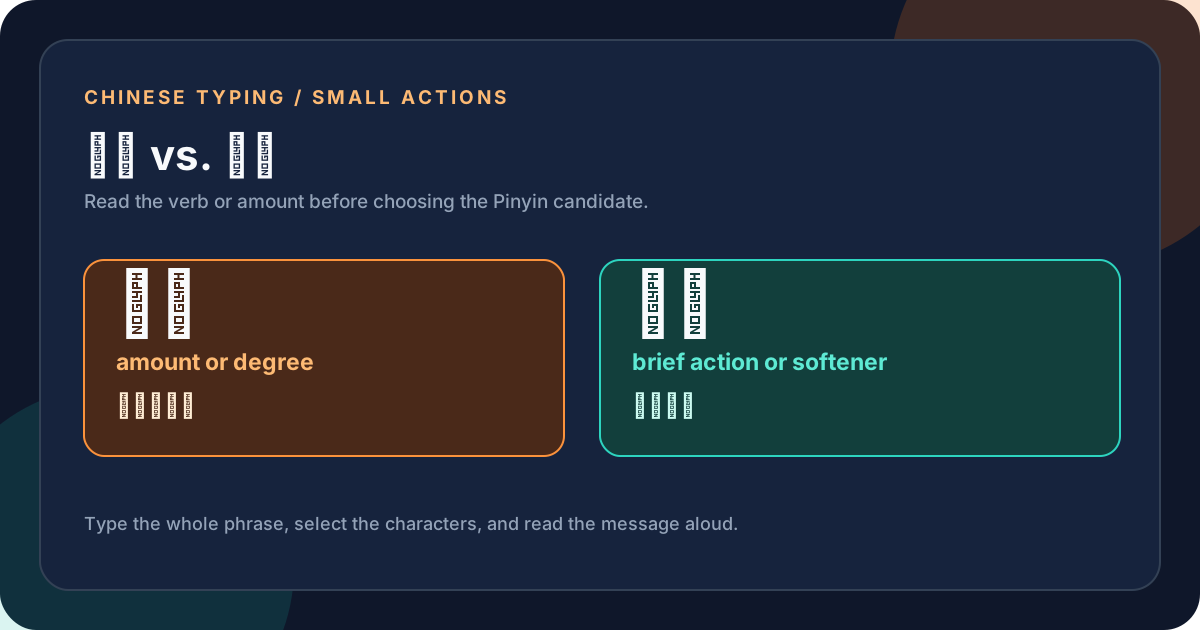
Use 一点 for a small amount or a small change in degree. Use 一下 with an action when you mean briefly, once, or in a softer everyday request. 请说慢一点。 asks someone to speak a little more slowly. 请等一下。 asks them to wait for a moment.
English uses "a little" for both ideas, so the translation can hide the difference. Chinese usually makes you choose between an amount or degree and a short action. This guide gives HSK 2 to 4 learners a sentence-level way to type the right characters, check the Pinyin candidate window, and reread the finished message.
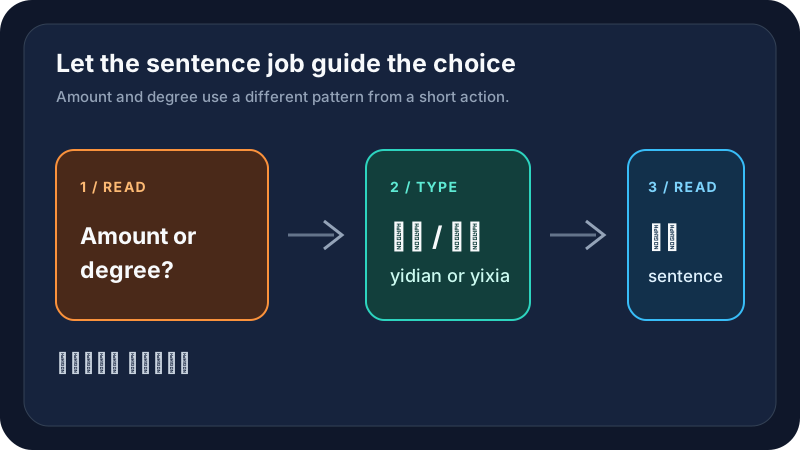
The short answer: amount or action?
| Message meaning | Useful learner default | Example | Meaning |
|---|---|---|---|
| A small amount | 一点 | 我想喝一点水。 | I want a little water. |
| A small change in degree | 一点 | 请说慢一点。 | Please speak more slowly. |
| A brief action | 一下 | 我看一下。 | I will take a look. |
| A softer everyday request | 一下 | 你等一下。 | Wait a moment. |
These are useful learner defaults. 一点 can describe amount or degree, while 一下 normally follows an action. The choice comes from the rest of the sentence, so typing yidian or yixia in isolation is a weak way to practise.
The official HSK syllabus is a useful reference when you build a study set. The examples here use HSK 2 to 4 vocabulary and ordinary message situations, without assigning every sentence to one exact exam level.
How to use 一点 for amount and degree
Use 一点 when the message contains a small quantity or asks for a small change:
我想吃一点米饭。(I want to eat a little rice.)我懂一点中文。(I understand a little Chinese.)请说慢一点。(Please speak a little more slowly.)这个便宜一点。(This one is a little cheaper.)
It can appear with a noun, after an action, or after an adjective:
一点水means a little water.吃一点means eat a little.快一点means be a little faster.
The same pattern works with 多一点 and 少一点. 多一点时间 asks for a little more time. 少放一点糖 asks someone to use a little less sugar. The phrase describes how much or how far something changes.
In spoken Mandarin, you may also hear 一点儿. The 儿 ending changes the sound and style in some varieties of speech, while the basic meaning stays close to 一点. Beginners can practise 一点 first and notice 一点儿 in real conversations.
For more help with choosing Chinese characters from sentence context, see the guide to fixing wrong Pinyin characters. The surrounding words often make the intended phrase easier to identify.
How to use 一下 for a brief action
Use 一下 after a verb when the action is short, limited, or presented as a light request:
我看一下。(I will take a look.)请等一下。(Please wait a moment.)你问一下老师。(Ask the teacher.)我检查一下文件。(I will check the document.)你试一下这个方法。(Try this method.)
The phrase does not always describe a stopwatch measurement. In ordinary messages, 一下 can make an action sound smaller or less heavy. 你看一下这个 is a natural way to ask someone to look at something. The relationship, situation, and tone still matter, so 一下 is not a universal politeness marker.
Keep the difference clear with these pairs:
| Sentence | What it changes | Natural meaning |
|---|---|---|
我看一点书。 | Amount of reading | I read a little. |
我看一下这本书。 | Length or scope of the action | I will take a quick look at this book. |
请说慢一点。 | Speed or degree | Please speak more slowly. |
请再说一下。 | A short repeat of speaking | Please say it again. |
这个便宜一点。 | Price or degree | This one is a little cheaper. |
你等一下。 | A short wait | Wait a moment. |
一下 normally attaches to an action. 便宜一下 does not express "a little cheaper"; use 便宜一点 for that meaning.
A Pinyin candidate routine that works
The input method maps sounds to possible Hanzi. It cannot decide whether your sentence describes a quantity, a degree, or a short action. You show the intended meaning through the words around the target.
The Ministry of Education's Hanyu Pinyin scheme is the reference for the Romanization system. Apple's guide to using the Chinese candidate window on Mac explains how candidates can be selected on a Mac. Other devices use different layouts, but the sentence-level routine is similar:
- Decide the sentence job. Is it about amount or degree, or is it about a short action?
- Type the surrounding phrase. Use
shuo man yidian,deng yixia, or the complete sentence. - Select the phrase from the candidate list. Do not stop at the first character in
yi. - Read the message once more. Check the verb, the amount, and the final punctuation.
The Mandarin sentence typing guide explains why complete output gives you a better accuracy check than isolated character recall.
A five-minute typing drill
Read the English meaning first. Type the Chinese sentence from memory, choose the candidates, and then change one word before typing it again.
| Meaning | Target sentence | Pinyin input |
|---|---|---|
| Please speak more slowly. | 请说慢一点。 | qing shuo man yidian |
| I want a little water. | 我想喝一点水。 | wo xiang he yidian shui |
| Please wait a moment. | 请等一下。 | qing deng yixia |
| I will take a look first. | 我先看一下。 | wo xian kan yixia |
| This one is a little cheaper. | 这个便宜一点。 | zhe ge pianyi yidian |
| I will ask the teacher again. | 我再问一下老师。 | wo zai wen yixia laoshi |
For more real-message prompts, use the Chinese typing practice drills. The 还是 and 或者 guide uses the same habit: let the sentence role guide the candidate choice.
Mistakes to catch before sending
Using 一下 for a change in degree
Use 请说慢一点 when you want someone to reduce speaking speed. 请说慢一下 can be understood in some contexts, but it does not give the same clear learner pattern. A degree change uses 一点.
Using 一点 for a short action
Use 你等一下 for "wait a moment." 你等一点 does not carry that ordinary message meaning. When a verb describes a brief action, 一下 is the useful starting point.
Choosing a candidate after one syllable
The sound yi appears in many words, and both target phrases begin with 一. Type the action or amount around it, then choose 一点 or 一下 as part of the full phrase. The real-message typing guide has more practice with this workflow.
Treating 一点儿 as a different core idea
一点儿 is a common spoken form related to 一点. It may sound different across speakers, but learners can start with the shorter written form and add the 儿 ending when it appears in their input or study materials.
Limits of this shortcut
The examples cover common HSK 2 to 4 message patterns. Longer sentences, regional speech, and context can change how a speaker chooses or places these words. 一下 also appears in fixed expressions and aspect patterns that need separate study.
When the intended meaning is still unclear, compare the whole sentence with a teacher or dictionary example. The 会, 能, and 可以 typing guide gives another example of separating English translations by the job a Chinese word does in the message.
FAQ
Can 一点 and 一下 replace each other?
Usually not. 一点 describes a small amount or degree, as in 多一点时间. 一下 follows an action, as in 看一下. Some sentences may be understood with either word after extra context, but the basic patterns are different.
Why is it 说慢一点 but 等一下?
慢 is an adjective describing speed, so 一点 marks a small change in degree. 等 is an action, so 一下 presents the wait as brief. The word before the target helps you choose.
Is 一下 always "once"?
No. It can describe a short action, and it can soften an everyday request. In 我看一下, the speaker usually means "I will take a look," not a carefully counted single look.
Is 一点儿 correct?
Yes. 一点儿 is common in speech and in some regional styles. It has a similar core meaning to 一点. Use the form that fits your class, device, or reference material.
How do I type 一点 and 一下 in Pinyin?
Type yidian or yixia together with the surrounding words. Then choose the complete phrase from the candidate window and reread the message. Typing yi alone gives the input method too little context.