How to Type 会, 能, and 可以 in Chinese Messages
MandarinReps
10/3/2026
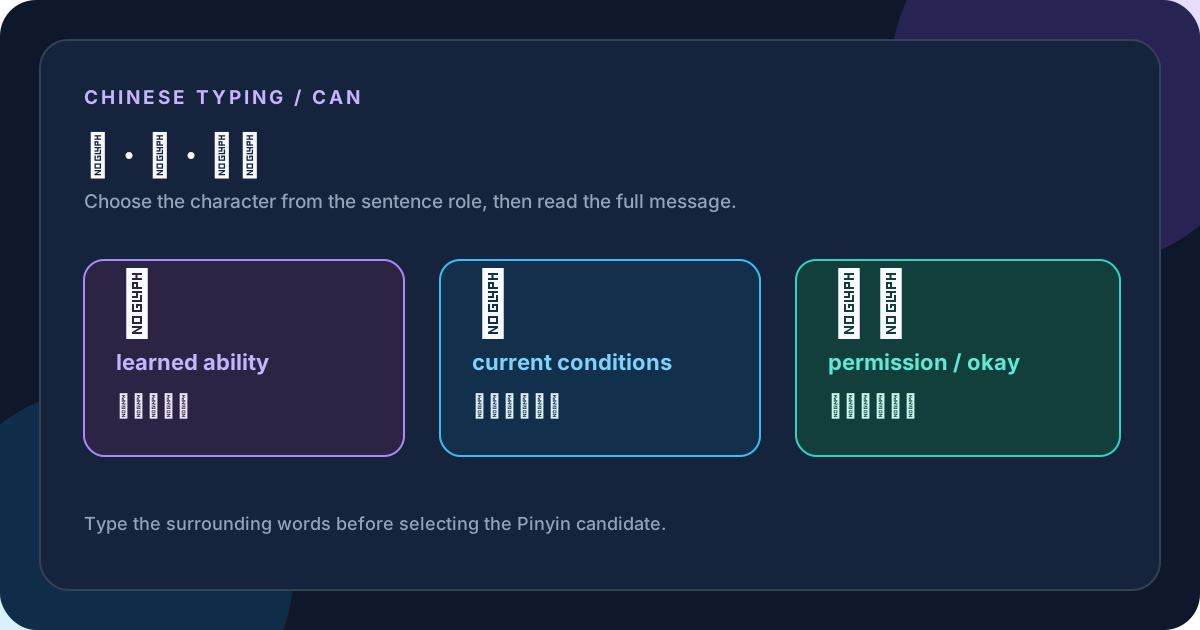
Use 会 when "can" means a learned skill or a likely future event. Use 能 when a person can do something because current conditions allow it. Use 可以 when the message is about permission or whether something is acceptable.
Compare these three messages:
我会游泳。means "I know how to swim."我今天不能游泳。means "I cannot swim today," perhaps because of time, health, or another condition.我可以在这里游泳吗?means "May I swim here?"
The English word "can" does not tell you which Chinese character to choose. The situation does. This guide gives HSK 2 to 4 learners a practical way to decide, type the full phrase, and check the candidate window before sending a message.
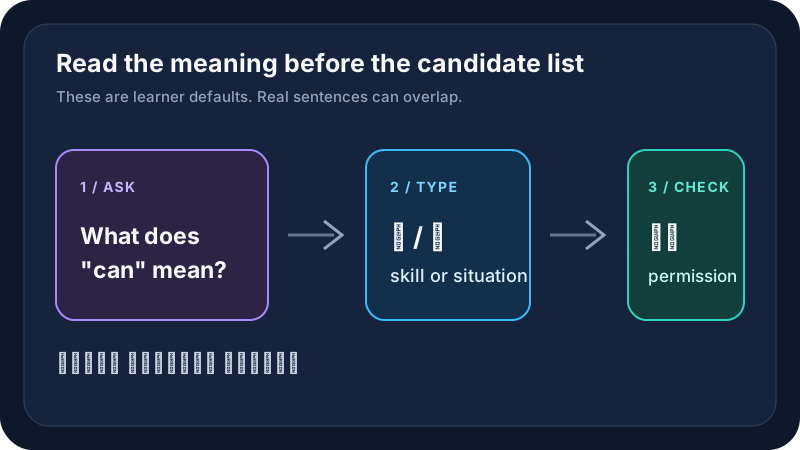
The short answer: skill, situation, or permission?
| Message meaning | Useful learner default | Example | Meaning |
|---|---|---|---|
| Learned ability | 会 | 我会打字。 | I know how to type. |
| Current capacity or conditions | 能 | 我今天能来。 | I can come today. |
| Permission or an acceptable option | 可以 | 我可以坐这里吗? | May I sit here? |
| Expected future event | 会 | 明天会下雨。 | It will probably rain tomorrow. |
These are starting points, not rigid translations. 能 and 可以 can overlap when a speaker asks whether an action is possible. The question is whether the message focuses on the person's circumstances or on permission. The table gives you a clear first choice while you are still building sentence intuition.
How to use 会 for learned ability
Use 会 when someone has learned how to do something. It works well with skills, languages, instruments, and other abilities that come from practice or instruction:
我会说一点中文。(I can speak a little Chinese.)她会用中文输入法。(She knows how to use a Chinese input method.)你会骑自行车吗?(Do you know how to ride a bicycle?)
会 can also describe an event that the speaker expects to happen:
他明天会来。(He will probably come tomorrow.)晚上会下雨。(It will probably rain tonight.)
The sentence tells you which use is intended. In 你会来吗?, the speaker may be asking whether you will come. In 你明天能来吗?, the focus is usually whether your schedule or circumstances allow you to come tomorrow. Both sentences can be useful, but they ask slightly different questions.
When typing hui, read the whole phrase before accepting a candidate. The sound can produce several characters, so 我会用中文输入法 gives the IME more information than hui by itself. The guide on fixing wrong Pinyin characters shows the same sentence-level habit with other common candidates.
How to use 能 for current circumstances
Use 能 when the answer depends on time, health, transport, equipment, or another condition:
你明天能来吗?(Can you come tomorrow?)我今天不能参加。(I cannot take part today.)手机没电了,我不能给你打电话。(My phone is out of battery, so I cannot call you.)下雨了,我们还能出去吗?(Can we still go out now that it is raining?)
The message is about what is possible in the situation. A person may know how to do the action and still be unable to do it today. 我会开车 says that driving is a learned skill. 我今天不能开车 says that today's conditions prevent it.
能 often appears in questions about arrangements:
你晚上能回消息吗?(Can you reply tonight?)我们现在能开始吗?(Can we start now?)
For a short message to a friend or colleague, 能 is a good first choice when you are checking availability. Link the word to the condition in the rest of the sentence so the meaning is clear.
How to use 可以 for permission
Use 可以 when someone is asking for permission, granting permission, or describing what is allowed:
我可以用你的电脑吗?(May I use your computer?)你可以晚一点回复。(You can reply later.)这里不可以拍照。(Taking photos is not allowed here.)我们可以在网上开会。(We can hold the meeting online.)
可以 also describes an acceptable or available option. In 我们可以明天再聊, the speaker is suggesting a possible arrangement. In 我可以明天去吗?, the speaker is asking whether tomorrow is acceptable or permitted.
Compare these two questions:
| Question | Main focus | Natural English |
|---|---|---|
你明天能来吗? | Is your schedule or situation free? | Can you come tomorrow? |
我可以明天去吗? | Is the plan allowed or acceptable? | May I go tomorrow? |
你会来吗? | Is coming expected or planned? | Will you come? |
The boundaries are not absolute. Speakers choose among these words based on context, relationship, and what they want to know. For a learner message, first decide whether you are checking a skill, a condition, or permission. Then reread the complete sentence.
A reliable Pinyin candidate routine
The input method maps sounds to possible Hanzi. It does not know whether your "can" means a learned skill, an available time, or permission. You supply that meaning through the surrounding words.
Apple's guide to using the Chinese candidate window on Mac describes selecting Chinese text from the candidates shown by the input method. Other devices arrange the window differently, but the typing routine is similar:
- Decide the message role. Ask: skill, current condition, or permission?
- Type the surrounding phrase. Use
wo hui,ni mingtian neng, orwo keyiwith the rest of the sentence. - Select after the phrase has context. Choose
会,能, or可以from the candidate list. - Read the whole message. Check the ending, question mark, and the words around the modal verb.
Do not stop at hui, neng, or keyi when several candidates are visible. The sentence-level Mandarin typing guide explains why complete output gives you a better accuracy check than isolated character recall.
A five-minute typing drill
Read the meaning first. Type the full sentence from memory, select the Hanzi, and then change one detail before typing it again.
| Meaning | Target sentence | Pinyin input |
|---|---|---|
| I know how to swim. | 我会游泳。 | wo hui youyong |
| Can you come tomorrow? | 你明天能来吗? | ni mingtian neng lai ma |
| May I use your phone? | 我可以用你的手机吗? | wo keyi yong ni de shouji ma |
| I cannot go today. | 我今天不能去。 | wo jintian bu neng qu |
| You can reply later. | 你可以晚一点回复。 | ni keyi wan yidian huifu |
| It will probably rain tomorrow. | 明天会下雨。 | mingtian hui xia yu |
For more prompts, try the real-message typing drills. When a sentence also contains time relationships, the 才 and 就 guide gives you another way to practise choosing characters from the full message.
Mistakes to catch before sending
Using 会 for every kind of "can"
会 is clear for a learned skill: 我会游泳。 It can also express an expected event, but it does not automatically mean that a person is available right now. For an arrangement, 你明天能来吗? makes the current condition explicit.
Using 可以 for a learned skill
我可以游泳 may be understood in context, but it can sound like "I am allowed to swim" or "Swimming is an option for me." Use 我会游泳 when the point is that you know the skill.
Treating 能 and 可以 as exact synonyms
我今天不能去 usually points to a condition that prevents the trip. 我今天不可以去 points more strongly to a rule or permission problem. Both can be understood, so use the surrounding context to make the intended reason clear.
Choosing the character before the sentence
Pinyin candidates are easier to judge after you have typed the subject, time, action, and ending. If the wrong candidate appears, add context and reread the phrase instead of repeatedly choosing from an isolated syllable. The real-message guide to Chinese typing has more drills built around this habit.
Limits of this shortcut
The three-way distinction is a useful learner default for short digital messages. Longer sentences, formal writing, spoken habits, and regional preferences can make 能 and 可以 overlap. A dictionary or teacher example is worth checking when the sentence could describe both a physical condition and a permission rule.
The same method works with other confusing pairs. The guide to 还是 and 或者 starts from the sentence's job, then uses the Pinyin candidate list as a final check.
FAQ
Are 能 and 可以 interchangeable?
Sometimes. Both can appear when a speaker asks whether an action is possible. 能 usually directs attention to the person's circumstances or capacity, while 可以 often asks whether the action is allowed or acceptable. Use that contrast as your learner default, then follow the context.
Does 会 always mean "will"?
No. 会 can describe a learned ability, as in 我会说中文, or an expected event, as in 明天会下雨. The verb and the rest of the sentence show which meaning is intended.
How do I type 可以 in Pinyin?
Type keyi with the surrounding words, then choose 可以 from the candidate window. For example, type wo keyi yong ni de shouji ma before selecting the characters. The full phrase gives the input method more context than keyi alone.
Is 不能 the same as 不可以?
They can both express a negative answer, but the focus differs. 不能 often describes inability or a blocked situation, while 不可以 more directly states that something is not permitted. Use 不可以 for a clear rule and 不能 when a condition prevents the action.