How to Type 虽然 and 但是 in Chinese Messages
MandarinReps
10/20/2026
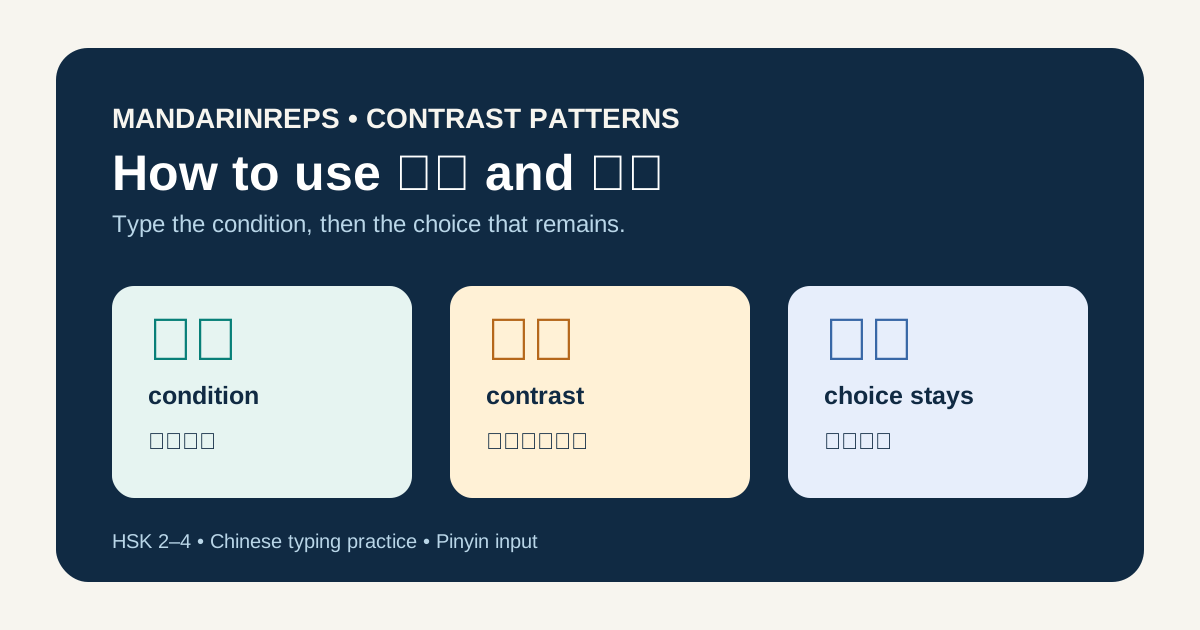
Use 虽然 (suīrán) to introduce a fact or condition that could change the expectation. Use 但是 (dànshì) to introduce the result, decision, or contrast that follows. The useful learner pattern is 虽然 + clause, 但是 + clause: 虽然今天下雨,但是我还是要出门。 (Although it is raining today, I still need to go out.)
In a short chat, you can keep both parts, omit 但是 when the contrast is clear, or start a reply with 但是: 我知道,但是我还是想去。 (I know, but I still want to go.) The words do not belong in unrelated sentences. The reader should see a condition and a result that do not match the first expectation.
This guide gives HSK 2 to 4 learners a sentence-level routine for typing 虽然 and 但是, choosing the Pinyin candidates, and deciding whether the message needs 还是, a comma, or a second clause.
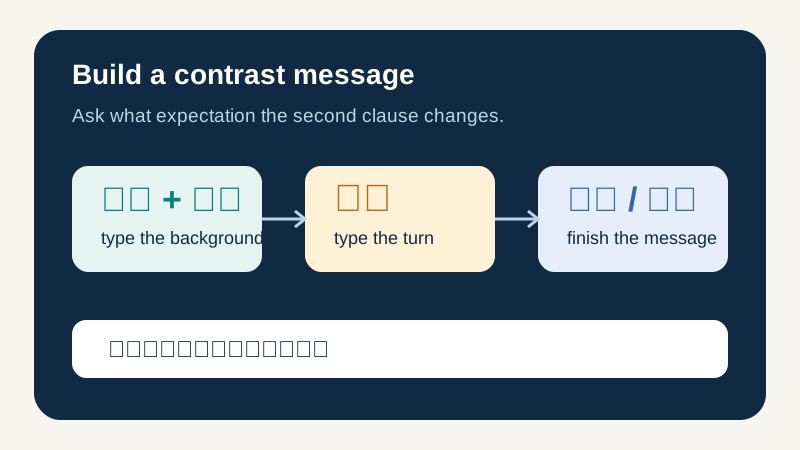
Type the condition first, then state the result that differs from the expectation.
The short answer: condition first, contrast second
| Message job | Useful learner pattern | Example | Meaning |
|---|---|---|---|
| Accept a difficult condition | 虽然 + clause | 虽然很累 | Although I am tired |
| State the contrast | 但是 + clause | 但是我还要学习。 | I still need to study. |
| Keep both parts | 虽然..., 但是... | 虽然很累,但是我还要学习。 | Although tired, I still need to study. |
| Drop the repeated connector | 虽然..., 还是... | 虽然很累,我还是要学习。 | Although tired, I still need to study. |
| Start a reply | 但是 + clause | 但是我可以晚上回复。 | But I can reply tonight. |
虽然 makes the first clause a background condition. 但是 introduces the part the reader may not expect. 还是 can add the idea that the speaker keeps the same choice despite the condition. The 还是 and 或者 guide explains that choice word in more detail.
Use 虽然 to set up the condition
Start with 虽然 when you want the reader to hold one fact in mind before seeing the decision:
虽然今天很忙,但是我可以回复。(Although I am busy today, I can reply.)虽然这个文件不完整,但是可以先看。(Although this file is incomplete, we can look at it first.)虽然路很远,但是值得去。(Although the road is far, it is worth going.)虽然他不舒服,但是还要上班。(Although he does not feel well, he still has to work.)
The 虽然 clause usually comes first in a learner sentence. It does not finish the whole thought by itself:
虽然今天下雨...(Although it is raining today...)虽然今天下雨,但是我们还是去。(Although it is raining today, we are still going.)
When you type a message beginning with 虽然, pause before sending and ask what the second clause will say. The reader needs the result or decision that makes the condition meaningful.
Use 但是 for the result or contrast
Use 但是 before the clause that changes the expected outcome:
但是我还是要出门。(But I still need to go out.)但是他没有回复。(But he did not reply.)但是价格太高了。(But the price is too high.)
但是 can also begin a second message in a conversation:
A:
今天下雨。B:
但是我还是想出去。
The second speaker accepts the first fact and adds a different decision. In a single message, write 虽然..., 但是... when the relationship needs to be explicit. In a quick reply, 但是... is enough when the earlier message supplies the first part.
Compare the complete and shorter patterns
Chinese often keeps the contrast without repeating every connector:
| Pattern | Example | When to use it |
|---|---|---|
| Full pair | 虽然很贵,但是我想买。 | Make the contrast easy to scan. |
| 虽然 with 还是 | 虽然很贵,我还是想买。 | Show that the choice remains. |
| 但是 alone | 很贵,但是我想买。 | Reply after the first fact is known. |
| Conditional pair | 如果下雨,我们就不去。 | Describe a condition and its result. |
虽然 describes an existing or accepted condition that does not stop the next action. 如果 introduces a possible condition and its consequence. The 如果 and 就 guide covers that conditional pattern.
Do not type both 但是 and 可是 in the same basic contrast. Choose one connector:
虽然很远,但是我想去。虽然很远,可是我想去。
Both can be understood, but one contrast connector is enough for a short learner message.
虽然 and 但是 in digital messages
These sentences fit common conversations about plans, work, study, and files:
虽然我现在很忙,但是我晚上可以回复。(Although I am busy now, I can reply tonight.)虽然文件有点大,但是可以发。(Although the file is a little large, it can be sent.)虽然下雨,但是我们还是去。(Although it is raining, we are still going.)虽然我还不会,但是我想试试。(Although I cannot do it yet, I want to try.)虽然时间不多,但是可以完成。(Although there is not much time, it can be completed.)
The contrast does not need to be dramatic. A small change in expectation is enough: a busy person can reply later, a large file can still be sent, or a learner can try something they do not yet know how to do.
The 因为 and 所以 guide shows a different relationship, where one clause gives a reason and the next gives its result. Use 虽然 and 但是 when the second clause goes against the first expectation.
Punctuation that keeps the sentence readable
Put a comma after the first 虽然 clause when both clauses appear in one message:
虽然今天很忙,但是我晚上可以回复。虽然有点远,我还是想去。
The comma separates the background condition from the decision. End the message with a full stop, question mark, or exclamation mark that fits the intention:
虽然很累,但是我还是要去。虽然很累,但是我还是要去吗?虽然很累,但是我还是要去!
The second sentence asks for confirmation. The third shows stronger feeling. The Chinese punctuation typing guide has more practice with Chinese commas and question marks.
A Pinyin candidate routine that works
The Ministry of Education Hanyu Pinyin scheme is the reference for the Romanization system. Standard Chinese keyboards usually let you type Pinyin without tone marks, so type the full phrase before selecting the characters.
- Type the condition:
suiran hen mang,suiran xiayu, orsuiran hen yuan. - Type the contrast:
danshi wo hai shi quordanshi wo keyi huifu. - Choose
虽然and但是from the candidate window. - Check whether the second clause shows a result, choice, or changed expectation.
- Read the comma, aspect marker, and final punctuation before sending.
Apple's guide to using the Chinese candidate window on Mac explains how to choose characters from candidates. Other keyboards use different layouts, but the sentence routine is the same. Typing suiran in a full phrase is safer than selecting a character after a partial sound. The Chinese Tests Service HSK syllabus gives a broader study framework; these drills keep the target at the level of complete digital messages.
A five-minute typing drill
Read the English meaning first. Type the Chinese from memory, choose the candidates, and mark the condition and the contrast.
| Meaning | Target sentence | Pinyin input | Check |
|---|---|---|---|
| Although I am busy, I can reply. | 虽然很忙,但是我可以回复。 | suiran hen mang danshi wo keyi huifu | condition: 忙 |
| Although it is raining, we still go. | 虽然下雨,但是我们还是去。 | suiran xiayu danshi women haishi qu | decision: 还是去 |
| Although it is expensive, I want it. | 虽然很贵,但是我想买。 | suiran hen gui danshi wo xiang mai | result: 想买 |
| Although far, it is worth going. | 虽然很远,但是值得去。 | suiran hen yuan danshi zhide qu | contrast: 值得去 |
| Although time is short, we can finish. | 虽然时间不多,但是可以完成。 | suiran shijian bu duo danshi keyi wancheng | result: 可以完成 |
| Although tired, I want to practise. | 虽然很累,但是我想练习打字。 | suiran hen lei danshi wo xiang lianxi dazi | decision: 想练习 |
After the first pass, rewrite two sentences without 但是:
虽然下雨,我们还是去。虽然很累,我还是想练习打字。
Then write one reply that starts with 但是: 但是我晚上可以回复。. The exercise shows how the full pair, the shorter pair, and the reply form share the same contrast.
For more real-message prompts, use the Chinese typing practice drills. The Mandarin sentence typing guide explains why a complete line gives you a better accuracy check than isolated Hanzi recall.
Mistakes to catch before sending
Stopping after 虽然
虽然今天很忙 gives the reader a condition but not the main point. Add the contrast: 虽然今天很忙,但是我可以回复. A short chat can omit 但是, but it still needs the second clause.
Using 但是 for two unrelated facts
我喜欢咖啡,但是今天是星期一 does not show a clear contrast by itself. Connect facts where the second clause changes the expected result: 虽然今天是星期一,但是我还是想休息.
Adding both 但是 and 可是
Use one connector in a basic sentence: 虽然很远,但是我想去 or 虽然很远,可是我想去. Repeating both makes the message heavier without adding information.
Confusing contrast with a condition
虽然下雨,但是我们还是去 says that the rain does not stop the plan. 如果下雨,我们就不去 says that rain controls the plan. Choose the pair from the relationship you mean.
Forgetting 还是 when the choice continues
虽然很累,但是我去 can be understood. 虽然很累,但是我还是去 makes the unchanged decision clearer. Use 还是 when the message needs that sense of continuing with the same choice.
Choosing candidates from one syllable
Type suiran hen mang danshi wo keyi huifu instead of choosing from suiran and danshi in isolation. Then inspect the Hanzi, clause boundary, and punctuation as one message.
Limits of this shortcut
These patterns cover common HSK 2 to 4 messages. Real conversations also use 可是, 不过, or 但是 alone, and speakers may leave out one connector when the relationship is obvious. Longer writing can place several clauses inside the condition or contrast.
The pattern does not mean every sentence with "although" needs both 虽然 and 但是. Start with the intended relationship: an accepted condition followed by a result that differs from the expectation. Then type the complete Chinese line and check whether the second clause answers the first.
FAQ
What is the difference between 虽然 and 但是?
虽然 introduces the condition or background fact. 但是 introduces the result or contrast. In 虽然很累,但是我还要学习, the first part describes tiredness and the second part states the decision.
Do I have to use 但是 after 虽然?
No. You can say 虽然很累,我还是要学习 when the contrast is clear. Including 但是 helps beginners and makes the two clauses easy to scan.
Can 但是 start a Chinese message?
Yes. If the earlier message supplies the first fact, a reply can begin with 但是: 但是我还是想去。 means "But I still want to go." The connector points back to the previous message.
Should I use 虽然 or 如果?
Use 虽然 for an accepted condition that does not stop the following action: 虽然下雨,但是我们还是去. Use 如果 for a possible condition and its consequence: 如果下雨,我们就不去.
How do I type 虽然 and 但是 in Pinyin?
Type suiran for 虽然 and danshi for 但是. Include both clauses before choosing candidates, such as suiran hen mang danshi wo keyi huifu, then check the contrast and punctuation.
Is 虽然但是 used in everyday messages?
Yes. A full 虽然..., 但是... sentence is easy to understand in messages. In a short reply, speakers may use 但是 alone, or omit 但是 when 虽然 and the second clause already make the contrast clear.