How to Type 还是 and 或者 in Chinese Messages
MandarinReps
10/1/2026
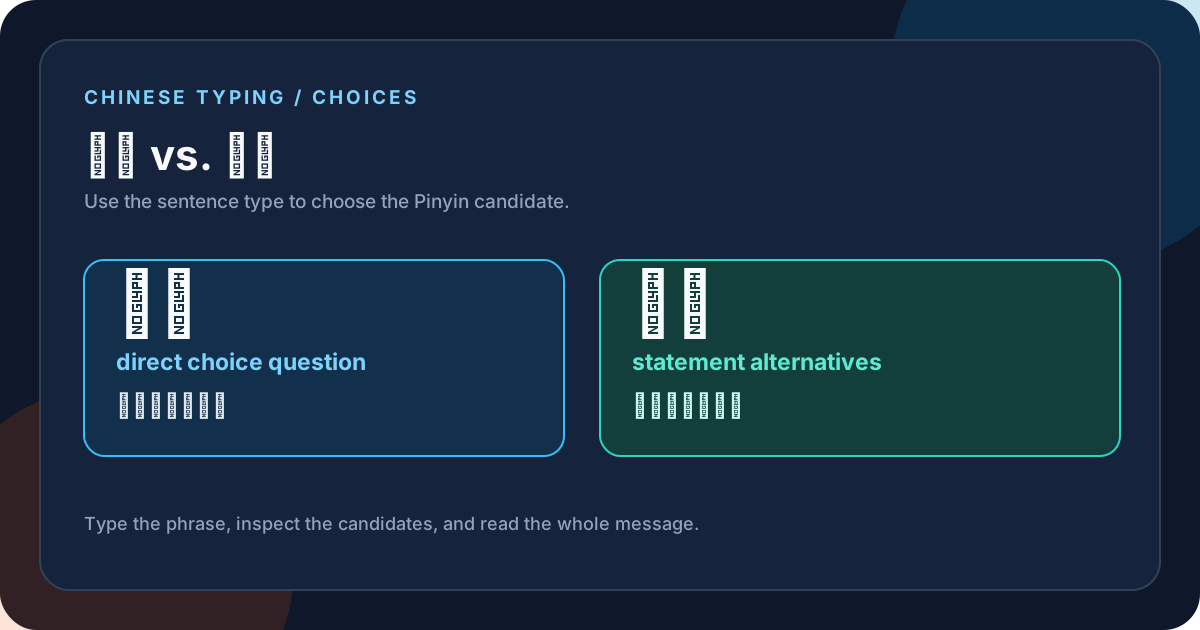
Use 还是 when you ask someone to choose between alternatives: 你喝茶还是咖啡? (Do you want tea or coffee?). Use 或者 when you give alternatives in a statement: 你可以喝茶或者咖啡。 (You can have tea or coffee.)
The same distinction works in many everyday messages. 你坐地铁还是打车? asks for a choice. 我坐地铁或者骑车去。 describes possible plans. In an embedded question, 还是 stays with the question: 我不知道你想喝茶还是咖啡。 (I do not know whether you want tea or coffee.)
Type the full phrase before choosing a Pinyin candidate. haishi can also lead to 海是 or a different word boundary, while huozhe may need the whole phrase for the IME to group 或者 correctly. The sentence structure tells you which Hanzi belongs in the message.
This guide covers practical HSK 2 to 4 patterns. 还是 also means 'still' in sentences such as 我还是喜欢茶, so check the role of the word before selecting a candidate.
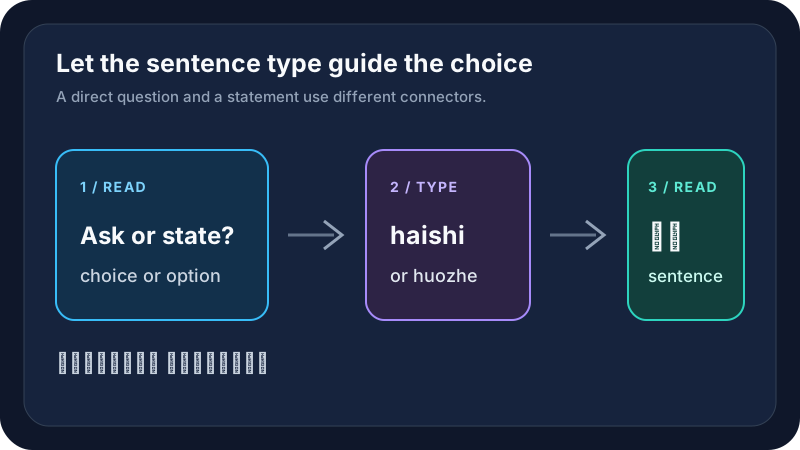
The short answer: question or statement?
| Message type | Chinese pattern | Example | Meaning |
|---|---|---|---|
| Direct choice question | A 还是 B? | 你喝茶还是咖啡? | Do you want tea or coffee? |
| Statement with alternatives | A 或者 B。 | 我喝茶或者咖啡。 | I drink tea or coffee. |
| Embedded question | verb + A 还是 B | 我不知道你喝茶还是咖啡。 | I do not know whether you want tea or coffee. |
| Suggestion | 还是 + action + 吧 | 我们还是走吧。 | Perhaps we should leave. |
The first pattern asks the other person to choose. The second gives information about options. The third reports an unanswered choice inside a larger sentence. The fourth uses 还是 in a suggestion, where it does not mean 'or.'
When you type a direct choice question, put the question mark at the end of the whole question: 你明天来还是后天来? The two alternatives sit inside one sentence, so an extra 吗 is usually unnecessary.
How to use 还是 in a direct question
Ask for one choice
Put 还是 between the alternatives:
你喝茶还是咖啡?(Do you want tea or coffee?)我们坐地铁还是打车?(Are we taking the subway or a taxi?)你今天来还是明天来?(Are you coming today or tomorrow?)
The alternatives should have the same job in the sentence. Drinks go with drinks, transport choices go with transport choices, and time choices go with time choices. This parallel shape makes the message easy to answer.
Use 还是 in an embedded question
An embedded question reports a choice that the speaker does not know or has not answered:
我不知道他喝茶还是咖啡。(I do not know whether he wants tea or coffee.)请告诉我你坐地铁还是打车。(Please tell me whether you are taking the subway or a taxi.)我还没决定周六还是周日去。(I have not decided whether to go Saturday or Sunday.)
The larger sentence can be a statement, but the choice inside it is still a question. That is why 还是 fits these examples.
Use 还是 in a suggestion
还是 can introduce a suggestion, often with 吧:
我们还是早点走吧。(Maybe we should leave early.)你还是问老师吧。(You should probably ask the teacher.)
Here 还是 means that one plan seems preferable after considering the situation. Learn the full pattern 还是 + action + 吧 rather than translating it as 'or.'
How to use 或者 in a statement
Give possible alternatives
Use 或者 when you are describing options, plans, or conditions:
我周六或者周日都有空。(I am free Saturday or Sunday.)你可以坐地铁或者坐公交车。(You can take the subway or the bus.)我们晚上或者明天早上再聊。(We can talk tonight or tomorrow morning.)
The speaker is giving information. The other person can choose, but the sentence itself is not asking them to select an answer.
Use 或者 in instructions and explanations
Messages often use 或者 when giving two ways to complete a task:
你可以发邮件或者发消息给我。(You can email me or send me a message.)不知道的时候可以查字典或者问老师。(When you are unsure, you can check a dictionary or ask a teacher.)
The two actions are alternatives inside a statement. Type the full verb phrase around 或者 so you can check that both options make sense.
Keep 或者 separate from 或是
或是 can also mean 'or' in writing and speech, but 或者 is a useful default for ordinary learner messages. The form you hear or read can vary by speaker and style. Build your first practice set around one consistent pattern, then notice other forms in real Chinese.
When 还是 means 'still'
The same characters appear in a different pattern:
我还是喜欢茶。(I still like tea.)他还是没有时间。(He still does not have time.)你还是学生吗?(Are you still a student?)
There is no pair of alternatives in these sentences. 还是 describes a situation that continues. In 你还是喝茶吗?, the word can suggest that tea was your earlier choice and the speaker is checking whether that remains true.
Ask two questions before selecting the character:
- Is the sentence asking someone to choose between A and B?
- Is
还是describing a situation that continues or recommending a plan?
The first answer points to the choice-question pattern. The second points to one of the other uses of 还是.
How to choose the Pinyin candidate
Use this loop when typing haishi or huozhe:
- Read the English meaning. Decide whether the message asks for a choice, states an option, reports an unknown choice, or describes something that continues.
- Type both alternatives. Use
ni he cha haishi kafeiinstead of stopping afterhaishi. - Select the phrase in context. Choose
还是for茶还是咖啡; choose或者for茶或者咖啡in a statement. - Check the ending. A direct choice question normally ends with
?; a statement usually ends with。.
Apple’s Chinese input method guide describes using a candidate window to select Chinese text on Mac. Other Pinyin IMEs use different layouts, but the same sentence-level habit works across devices. If a candidate looks wrong, the guide on fixing wrong Pinyin characters shows how to add context and reread the full message.
A five-minute typing drill
Read the meaning, type the Chinese sentence from memory, and select the candidates only after you have entered the surrounding words. Then change one detail and type it again.
| Meaning | Target sentence | Pinyin input |
|---|---|---|
| Do you want tea or coffee? | 你喝茶还是咖啡? | ni he cha haishi kafei |
| I can go Saturday or Sunday. | 我周六或者周日可以去。 | wo zhouliu huozhe zhouri keyi qu |
| Are we eating at home or outside? | 我们在家吃还是出去吃? | women zai jia chi haishi chuqu chi |
| You can call or send a message. | 你可以打电话或者发消息。 | ni keyi da dianhua huozhe fa xiaoxi |
| I do not know whether he is coming. | 我不知道他来还是不来。 | wo bu zhidao ta lai haishi bu lai |
| I still like this restaurant. | 我还是喜欢这家饭店。 | wo haishi xihuan zhe jia fandian |
For more sentence prompts, use the real-message typing drills. The 才 and 就 guide helps when your sentence has two possible time relationships rather than two choices.
Mistakes to catch before sending
Putting 或者 in a direct choice question
For a clear learner default, use 还是 when asking the person to choose: 你坐地铁还是打车? The question mark and the two parallel alternatives make the request easy to answer.
Adding 吗 after a 还是 question
你喝茶还是咖啡? already contains the choice structure. 吗 belongs to many yes or no questions, while a choice question gives the answer options inside the sentence.
Using 还是 when the sentence gives information
If you are telling someone about your possible plans, use 或者: 我周六或者周日都有空。 The message can still invite a reply, but its grammar is a statement about alternatives.
Missing the continuing meaning of 还是
我还是喜欢茶 means 'I still like tea.' It does not offer tea as one side of a choice. Look for a second alternative before applying the direct question rule.
Selecting a candidate before typing the phrase
hai, shi, and huo have many valid Hanzi matches. Type the alternatives, inspect the candidate window, and read the complete message. A single syllable rarely contains enough information to choose the right character.
Limits of this shortcut
The examples cover common HSK 2 to 4 messages. Spoken Chinese, regional habits, formal writing, and longer sentences can use additional patterns. A teacher or dictionary example is useful when a choice question and a continuing meaning could both fit.
The 在 and 再 typing guide covers another pair that learners meet in time and sequence messages. Practise each contrast inside complete sentences, where the surrounding words show what the writer intends.
FAQ
Should I use 还是 or 或者 after a question word?
Use 还是 when the sentence asks the listener to choose: 你想吃什么,米饭还是面? Use 或者 when the sentence gives possible options as information: 你可以吃米饭或者面。 In an embedded question such as 我不知道你想吃什么, add 还是 when you list the alternatives.
Can 或者 appear in a question?
Yes, speakers may use 或者 in questions in some contexts, especially when asking whether a possibility is true. For a direct A-or-B choice aimed at learners, 还是 is the clearer default: 你明天来还是后天来?
Why does 还是 sometimes mean 'still'?
还是 has more than one common use. It marks alternatives in 你喝茶还是咖啡?, and it marks continuation in 我还是喜欢茶。 The presence of two options usually signals the choice-question use.
Why does the Pinyin input show the wrong candidate?
Pinyin maps sounds to possible Hanzi, and the candidate order depends on the phrase and device. Type the complete alternative, choose 还是 or 或者 from the sentence role, and read the finished message. The sentence-level Mandarin typing guide explains why longer output gives you a better check.