How to Type 还没 and 还不 in Chinese Messages
MandarinReps
10/27/2026
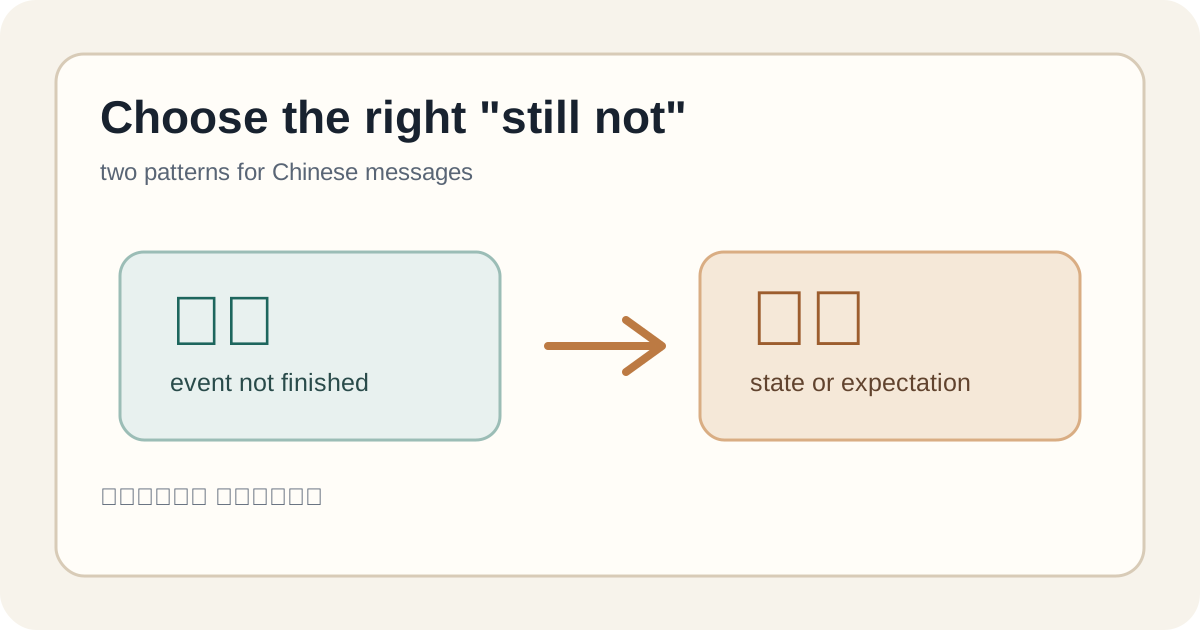
Use 还没 (hái méi) when an event has not happened or finished yet. Use 还不 (hái bù) when a person or situation still does not do something, remains in a negative state, or seems late to meet an expectation.
Compare these messages:
我还没吃饭。(I have not eaten yet.)你还不吃饭?(You are still not eating?)文件还没发。(The file has not been sent yet.)文件还不完整。(The file is still incomplete.)
Both forms can translate as "still not" in English. Ask whether the negative part describes an unfinished event or a continuing state or choice before you select the Hanzi candidate.
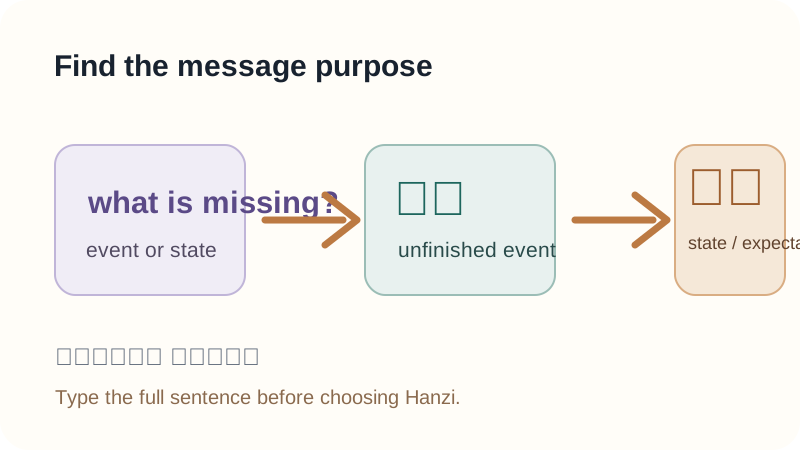
Ask whether the event is unfinished or the negative state is continuing before typing 没 or 不.
The short answer: 还没 is about an event, 还不 is about a continuing state
| Message job | Useful pattern | Example | Natural reading |
|---|---|---|---|
| Say an event has not happened yet | Subject + 还没 + verb | 我还没回复。 | I have not replied yet. |
| Say an event is still unfinished | Subject + 还没 + verb + object | 他还没写完作业。 | He has not finished the homework yet. |
| Ask why an expected action has not started | Subject + 还不 + verb | 你还不睡? | You are still not going to sleep? |
| Describe a continuing negative state | Subject + 还不 + adjective | 天气还不够暖。 | The weather is still not warm enough. |
These are useful learner defaults for HSK 2 to 4 messages. 还没 points to a missing event or incomplete result. 还不 keeps the focus on a present or expected condition.
Use 还没 when something has not happened yet
Place 还没 before the verb when the action remains incomplete or has not occurred:
我还没吃饭。(I have not eaten yet.)她还没到家。(She has not arrived home yet.)我们还没决定时间。(We have not decided on a time yet.)
The message reports the status of an event. It does not, by itself, say that someone is refusing, careless, or making a bad choice. That makes 还没 a useful neutral answer when someone asks about progress:
你回复了吗?还没,我下午回复。
还没有 is the longer form of 还没 and can sound more deliberate in a written message:
我还没有看邮件。(I have not checked the email yet.)报告还没有准备好。(The report is not ready yet.)
Use the longer form when you want the sentence to feel more deliberate. In quick chats, 还没 is common.
还没 can describe a result that is not complete
Put a result phrase after the verb when you want to say what remains unfinished:
我还没写完。(I have not finished writing it yet.)你还没准备好?(You are not ready yet?)
In 你还没准备好?, the question checks whether preparation is complete. 你还不准备? puts more pressure on the delayed choice.
Use 还不 when a negative state or choice continues
Use 还不 when the subject continues to avoid an action, has not changed a current state, or is expected to act by now:
你还不睡?(You are still not going to sleep?)你还不回复吗?(You are still not replying?)我还不确定时间。(I am still not sure about the time.)
The phrase often carries an expectation. 你还不睡? can mean that it is late and the speaker thinks you should sleep. 你还没睡? is a softer check about whether sleep has happened.
还不 also works before an adjective or adjective phrase:
这个答案还不完整。(This answer is still incomplete.)时间还不够。(There is still not enough time.)
Here, 不 describes the present condition rather than one missed event such as 还没回复 or 还没到家.
Compare a neutral status check with an impatient question
The difference becomes easier to hear in pairs:
| Status check with 还没 | Expectation with 还不 | What changes |
|---|---|---|
你还没回复吗? | 你还不回复吗? | The first checks whether a reply has happened. The second asks why the person is still withholding or delaying it. |
你还没走吗? | 你还不走吗? | The first checks whether the person has left. The second suggests that leaving should happen now. |
你还没开始? | 你还不开始? | The first asks about the start status. The second pushes for action. |
他还没决定。 | 他还不决定。 | The first reports a pending decision. The second criticizes continued inaction. |
When you are writing to a teacher, client, or new contact, start with 还没 if you only need a status update. Add a time or a plain request:
我还没看到文件,可以下午发给我吗?你还没回复,我想确认一下时间。
Use 还不 when the expectation is part of your meaning. In a work message, it may sound impatient unless the context is clear.
One useful pattern for real messages
还没...就...
This pattern says that one event happened before another event finished:
课还没结束,他就走了。(Class had not ended yet, but he left.) The first clause names the unfinished event.就introduces the action that happened early or quickly.
Put the difference into real messages
These examples fit study chats and everyday coordination:
我还没看完这篇文章,晚上回复你。(I have not finished this article. I will reply tonight.)你还不出门吗?电影快开始了。(Are you still not leaving? The movie is about to start.)订单还没确认。(The order has not been confirmed yet.)他还没到,你先坐。(He has not arrived yet. Sit down first.)
The first and third messages report unfinished events. The second expresses an expectation, and the fourth describes a continuing state. Label the message job before opening your input method.
The guide to 不 and 没 explains the broader difference between the two negative words. The guide to 刚 and 刚才 helps when your message needs a more precise recent-time reference.
A Pinyin routine for 还没 and 还不
The Ministry of Education overview of Hanyu Pinyin describes Pinyin as a tool used in learning and communication. Use it to enter the full message instead of selecting 还, 没, or 不 in isolation:
- Decide whether the event is unfinished or the negative state is continuing.
- Type the complete phrase, such as
wo hai mei hui fuorni hai bu shui. - Select
还没or还不from the candidate window. - Check the verb or adjective after the negative phrase.
- Read the message once for grammar and once for tone.
Apple's Chinese input method guide explains how the candidate window presents possible characters for an input code. Windows, Android, and iPhone controls differ, but the sentence-level habit transfers across keyboards.
Typing hai mei as part of wo hai mei chi fan gives the input method more context than typing hai and choosing a character before you know the sentence. Typing hai bu in ni hai bu hui fu ma also lets you check whether the message sounds like a status question or a challenge.
If the keyboard selects the wrong character, the wrong-character troubleshooting guide gives a review routine. The real-message typing drills add more short prompts.
A five-minute typing drill
Read the English prompt, type the Chinese sentence from memory, and label the tone before you send it:
| English prompt | Target sentence | Pinyin input | Check |
|---|---|---|---|
| I have not eaten yet. | 我还没吃饭。 | wo hai mei chi fan | unfinished event |
| Are you still not sleeping? | 你还不睡? | ni hai bu shui | expectation |
| The file has not been sent yet. | 文件还没发。 | wenjian hai mei fa | unfinished event |
| The answer is still unclear. | 答案还不清楚。 | daan hai bu qingchu | continuing state |
| Class had not ended, but he left. | 课还没结束,他就走了。 | ke hai mei jieshu, ta jiu zou le | early action |
| Are you still not replying? | 你还不回复吗? | ni hai bu huifu ma | possible pressure |
On a second pass, change one part of each sentence. Turn 我还没吃饭 into 我还没看邮件. Turn 你还不睡 into 你还不回家. Keep the structure visible while the vocabulary changes.
The Mandarin sentence typing practice guide explains why complete sentences give you more useful output practice than isolated character lists. After typing, hide the English prompts and write one message from your own day.
Mistakes to catch before sending
Using 还不 for every English "not yet"
我还不吃饭 can sound like "I still refuse or do not intend to eat." For a neutral progress update, write 我还没吃饭.
Using 还没 for a continuing opinion or state
我还没确定 means I have not decided yet. 我还不确定 means I am still uncertain. Both can be useful, but the second keeps the focus on the current state of certainty.
Ignoring the tone of a question
你还没回复吗? usually checks a missing reply. 你还不回复吗? can sound like the speaker expects the reply now. Add context if the relationship is formal.
Choosing candidates one syllable at a time
Typing only hai can produce several candidates. Type the phrase and review the complete sentence before sending. The Chinese punctuation typing guide covers question marks and commas for these tone differences.
FAQ
What is the difference between 还没 and 还不?
还没 usually says that an event has not happened or finished yet. 还不 usually says that a person or situation remains in a negative state, or that an expected action has still not started. Compare 我还没回复 with 你还不回复?.
Can 还没 and 还不 be used with the same verb?
Sometimes, but the meaning and tone change. 你还没走吗? checks whether you have left. 你还不走吗? suggests that you should leave now. Choose the form that matches the message purpose.
How do I type 还没 with Pinyin?
Type hai mei inside the full phrase, such as wo hai mei hui fu, then choose 还没 from the candidate window. Check the sentence after selecting the characters.
How do I type 还不?
Type hai bu inside the full phrase, such as ni hai bu shui, then select 还不. Read the completed message to see whether it sounds like a neutral description or a push for action.
Why does 还不 sometimes sound impatient?
The phrase often carries an expectation that an action should already be happening. 你还不回复? can ask for a reason or express frustration. Add context, a time reference, or a polite request when the reader is a teacher, client, or new contact.
Limits of this shortcut
These patterns cover common HSK 2 to 4 messages. Real tone depends on the relationship, the time pressure, and the words around 还没 or 还不. A grammatically correct question can still sound sharp if the reader is already busy.
When you only need a progress update, start with 还没. When you want to describe a continuing negative state or an expected action, consider 还不. Type the complete sentence, select the Hanzi, and reread the line as the recipient would.