How to Type 只 and 只有 in Chinese Messages
MandarinReps
10/24/2026
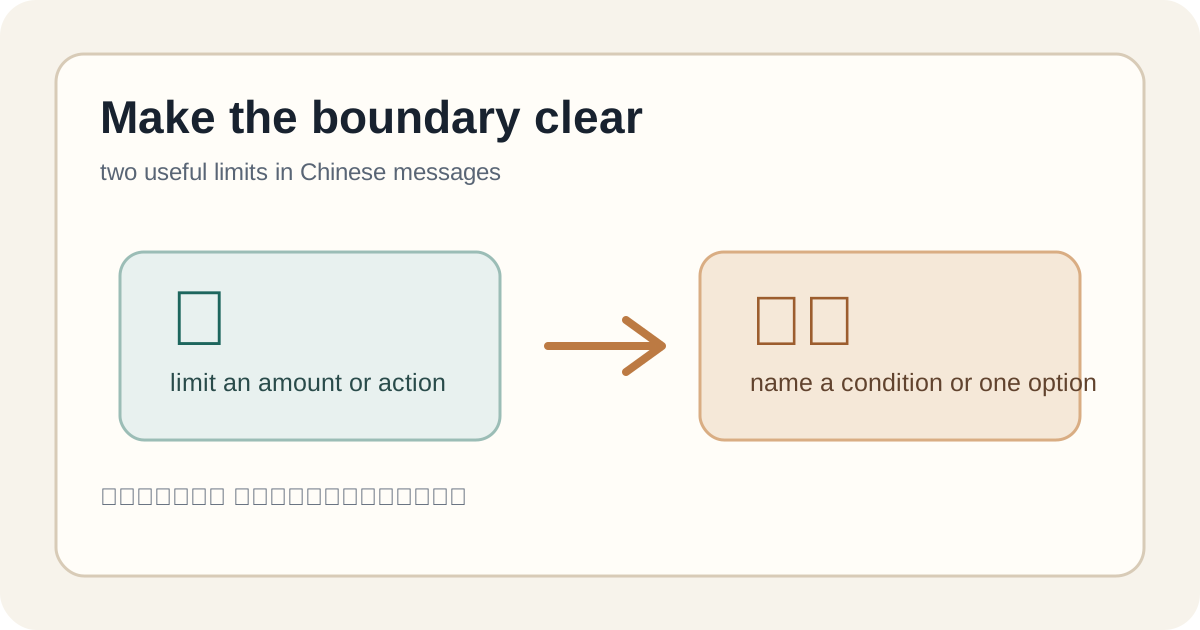
Use 只 (zhǐ) when you want to limit a person, amount, or action. Use 只有 (zhǐyǒu) when you want to name a single option or set a condition. In a message, 只 often answers "how much, who, or what is included?" 只有 often answers "under what condition can this happen?"
Compare these messages:
我只需要你的邮箱。(I only need your email.)只有你能打开这个文件。(Only you can open this file.)只有确认以后,才可以发送。(Only after confirmation can it be sent.)
The Pinyin input method can offer the characters, but it cannot decide whether you are limiting a request or stating a condition. Type the complete phrase, choose the Hanzi candidate, and reread the relationship between the two parts before sending.
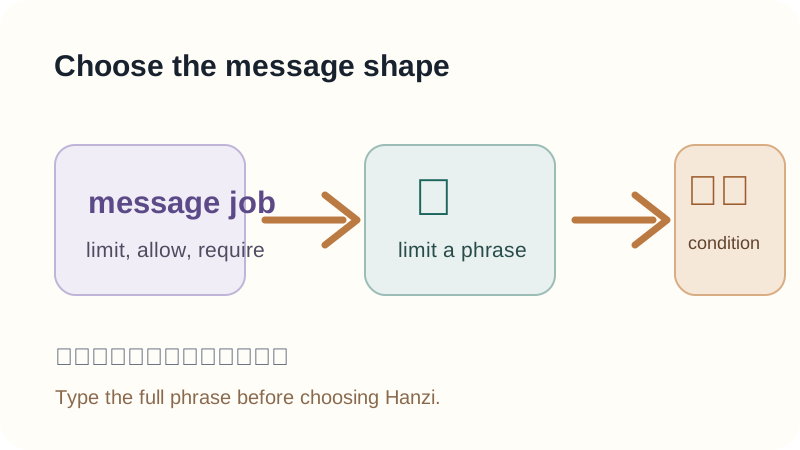
Decide whether the message limits something or names a condition, then choose the Hanzi.
The short answer: 只 limits, 只有 narrows the condition
| Message job | Useful pattern | Example | Meaning |
|---|---|---|---|
| Limit an amount | 只 + verb or quantity | 我只喝茶。 | I only drink tea. |
| Limit a person or recipient | 只 + person | 我只告诉你。 | I will tell only you. |
| Name one person or option | 只有 + person or noun | 只有你知道。 | Only you know. |
| Set a condition | 只有 + condition | 只有登录以后才可以看。 | You can view it only after logging in. |
This is a practical learner shortcut. The exact meaning still comes from the phrase around the word. In 我只看中文消息, 只 limits what the speaker reads. In 只有中文消息可以保留, 只有 narrows which messages may remain.
Use 只 to limit a person, amount, or action
Put 只 before the part you want to limit. It can limit a quantity:
我只要一杯水。(I only want one glass of water.)今天我只练习十分钟。(Today I will practice for only ten minutes.)我只买两个。(I will buy only two.)
It can limit a person or destination:
这条消息只发给你。(This message is sent only to you.)我只告诉老师。(I will tell only the teacher.)这个链接只给组员。(This link is for group members only.)
It can limit an action:
我只看,不回复。(I will only read it, not reply.)他只用手机打字。(He types only on a phone.)我们只练习短句。(We practice only short sentences.)
The position of 只 matters. 我只发给你 focuses on the recipient. 我发给你,只看一下 would need more context because the second phrase changes what is being limited. When a message could be read in two ways, move 只 directly before the limited phrase or rewrite the sentence.
Use 只有 for one option or a condition
只有 can say that just one person or thing has a quality:
只有你知道地址。(Only you know the address.)这个房间只有一张桌子。(This room has only one table.)只有周末有时间。(There is time only on the weekend.)
It can also introduce the condition for a result. The common pattern is:
只有 + condition,才 + result
Examples:
只有先登录,才能看到文件。(You can see the file only after logging in.)只有确认地址,才可以发送。(It can be sent only after the address is confirmed.)只有每天练习,才会更熟悉。(Only with daily practice will it become more familiar.)
The first part names the requirement. 才 marks the result as dependent on that requirement. A sentence with 只有 does not always need 才. 只有你能处理这个问题 simply says that one person can handle it. Add 才 when you want to connect a condition to an outcome.
Compare 只, 只有, 只要, and 才
These words often appear in the same learner questions, especially in instructions and study plans:
| Word | Main job | Example | Reader hears |
|---|---|---|---|
| 只 | Limit what is included | 我只看第一部分。 | Only the first part is included. |
| 只有 | Name one option or condition | 只有管理员能修改。 | The administrator is the only one. |
| 只要 | State a sufficient condition | 只要登录就可以查看。 | Logging in is enough. |
| 才 | Mark a delayed or required result | 登录以后才可以查看。 | Viewing depends on that step. |
The difference between 只有 and 只要 is useful in digital instructions. 只有管理员才能修改 restricts the action to administrators. 只要登录就可以查看 says that anyone who logs in can view it. One sets a narrow condition; the other says a condition is sufficient.
For more practice with condition sentences, read the 如果 and 就 message guide. The 才 and 就 guide covers how those result markers change the timing and expectation of a sentence.
Put the pattern into real messages
These examples fit study chats, work messages, and simple account instructions:
我只需要你的邮箱,不需要密码。(I only need your email, not your password.)这个文件只有你能打开。(Only you can open this file.)只有确认以后,才可以发出去。(It can be sent only after confirmation.)我只在晚上练习中文打字。(I practice Chinese typing only in the evening.)只要你有时间,就可以参加。(As long as you have time, you can join.)
In a short chat, 只 can sound restrictive if the reader does not know what is excluded. Add the missing boundary when it helps:
我只需要邮箱,不需要其他资料。(I only need the email, not other information.)这条消息只发给你,请不要转发。(This message is only for you. Please do not forward it.)
The Chinese punctuation typing guide gives more practice with commas and full stops in messages with two related clauses.
A Pinyin routine for 只 and 只有
The Ministry of Education overview of Hanyu Pinyin describes Pinyin as a tool used in learning and in Pinyin input communication. For daily typing, the exact keyboard controls vary, but the sentence-level routine stays simple:
- Decide the job in English: limit an amount, name the only person, or state a condition.
- Type the whole phrase, such as
wo zhi xuyao nide youxiangorzhiyou denglu yihou cai keyi kan. - Select the phrase candidate
只or只有instead of choosing from one syllable in isolation. - Check the next word. If the sentence describes a required result, look for
才or another result marker. - Read the complete message once for meaning and once for punctuation.
Typing zhi by itself may show 只, 纸, 指, or other candidates. Typing zhiyou inside the full phrase gives the input method more context. Apple's Chinese input method guide explains that the candidate window displays possible characters for an input code and lets you select the intended candidate.
If the input method still chooses the wrong character, the wrong-character troubleshooting guide has a longer review routine.
A five-minute typing drill
Read the meaning, type the Chinese from memory, and explain what 只 or 只有 limits:
| Meaning | Target sentence | Pinyin input | Check |
|---|---|---|---|
| I only need your name. | 我只需要你的名字。 | wo zhi xuyao nide mingzi | amount of information |
| Send it only to the teacher. | 只发给老师。 | zhi fa gei laoshi | recipient |
| Only you know the answer. | 只有你知道答案。 | zhiyou ni zhidao daan | one person |
| You can see it after logging in. | 登录以后才可以看。 | denglu yihou cai keyi kan | required result |
| Only after checking can we send it. | 只有检查以后,才可以发送。 | zhiyou jiancha yihou cai keyi fasong | condition and result |
| As long as you have time, join. | 只要你有时间,就参加吧。 | zhiyao ni you shijian jiu canjia ba | sufficient condition |
On a second pass, change one part of each sentence. Turn 我只需要你的名字 into 我只需要你的邮箱. Turn 只有你知道答案 into 只有老师知道答案. This keeps the grammar fixed while you practice choosing new Hanzi candidates.
The real-message typing drills add more prompts if you want to repeat the same routine with dates, requests, and short replies.
Mistakes to catch before sending
Treating 只有 as a stronger version of 只
只 limits a phrase: 我只看中文。 只有 introduces the one option or condition: 只有中文可以保留。 Ask whether the sentence is limiting an action or setting a boundary around who or when.
Adding 才 to every sentence with 只有
只有你能来 is complete. Use 才 when the sentence has a condition and a result, such as 只有你来,我才放心。
Confusing 只有 with 只要
只有管理员才能修改 restricts the action to administrators. 只要登录就可以修改 says that logging in is enough. Check who is allowed to act before choosing the word.
Choosing a candidate from one syllable
zhi is not a complete decision. Type wo zhi xuyao or zhiyou ni neng, then inspect the sentence. The candidate list can suggest a character, while the sentence tells you whether it makes sense.
Leaving the boundary unstated
我只要邮箱 may be clear in a short exchange, but 我只需要邮箱,不需要密码 is safer when the reader might send extra information. A few extra characters can remove an avoidable follow-up.
FAQ
What is the difference between 只 and 只有?
只 limits a person, quantity, or action. 只有 names one option or introduces a condition. Compare 我只喝茶 (I only drink tea) with 只有我喝茶 (Only I drink tea).
Does 只有 always need 才?
No. 只有你知道 is a complete statement about one person. Use 只有...才... when the first clause is a requirement for the result in the second clause.
What is the difference between 只有 and 只要?
只有 makes the condition narrow: only a specific person, time, or step qualifies. 只要 says that the condition is enough. 只有管理员才能改 and 只要登录就能看 give the reader different access rules.
Can 只有 stand at the start of a message?
Yes. 只有周末有时间 means that the weekend is the only time available. Add a second clause when you need to explain what happens under that condition.
Where should I put 只 in a Chinese sentence?
Put 只 before the person, amount, or action you want to limit. Compare 我只发给你 with 我发给你,只看一下. If the focus is unclear, write the limited phrase immediately after 只.
How do I type 只 and 只有 with Pinyin?
Type zhi for 只 and zhiyou for 只有, then select the intended candidate. Type the surrounding words first when several characters share the same sound.
Does 只 always mean only?
In these beginner and intermediate message patterns, 只 commonly means "only" or "just." The exact reading depends on the phrase, so learn it inside a sentence such as 只要 or 只有 rather than treating every 只 as an isolated translation.
Limits of this shortcut
These patterns cover common HSK 2 to 4 messages. Word order, context, and the relationship between speakers can change the emphasis. A short chat may leave out a subject or result clause that a formal instruction would state. When a message controls access, money, files, or another person's action, write the condition and the result explicitly.
The Mandarin sentence typing guide explains why complete sentences are better practice than isolated candidate lists. Use this guide for the grammar choice, then reread the final message as the recipient would see it.