How to Type 以前 and 以后 in Chinese Messages
MandarinReps
10/22/2026
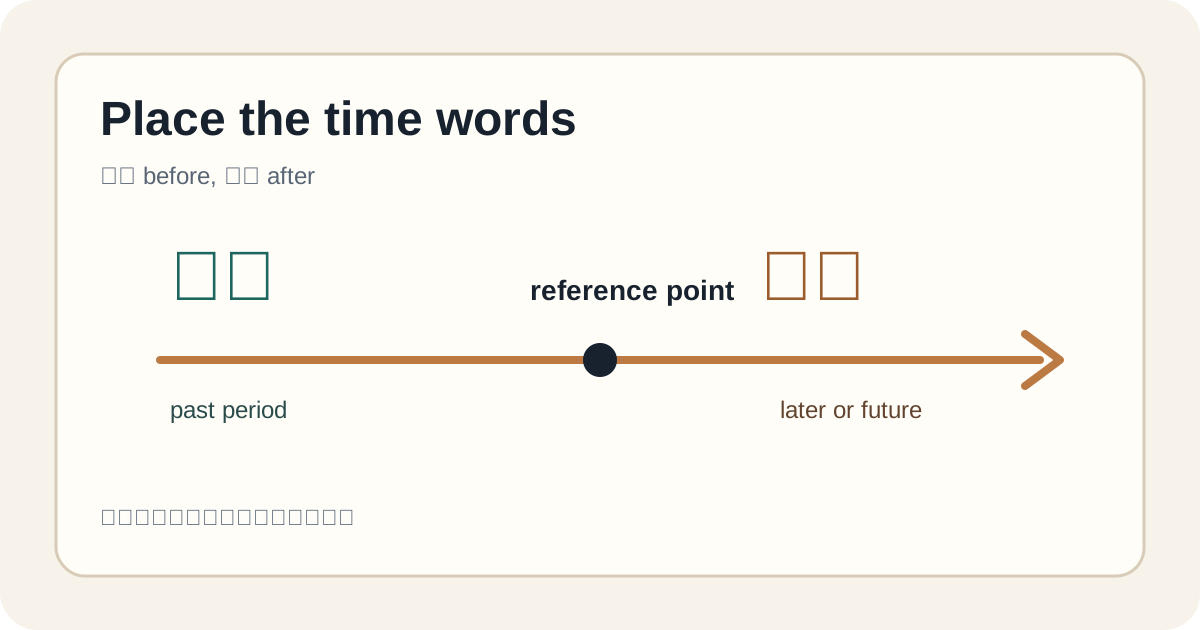
Use 以前 (yǐqián) for a time before now or before a reference point. Use 以后 (yǐhòu) for a time after an event or later in the future: 我以前住在上海。 (I used to live in Shanghai.) 下课以后给我发消息。 (Message me after class.)
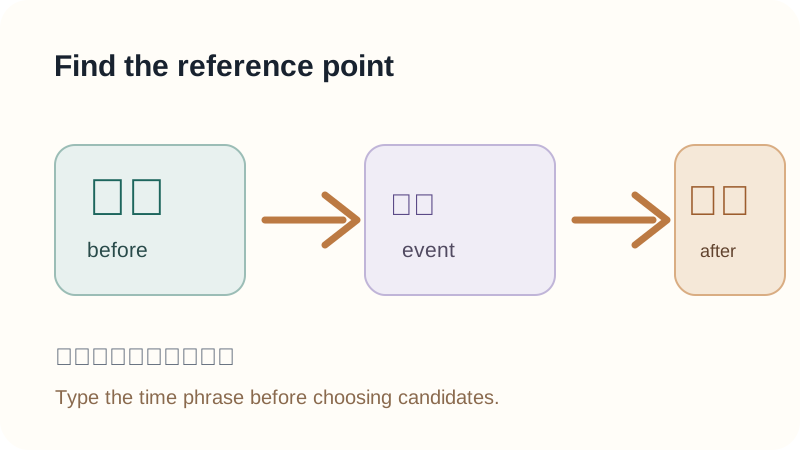
The two words make time clear in everyday Chinese messages. 以前 often describes a past habit or an earlier period. 以后 points to what happens after a time, event, or future change. Type the complete time phrase before choosing Hanzi so the Pinyin candidate list has enough context.
This guide gives HSK 2 to 4 learners a sentence-level routine for typing 以前 and 以后, comparing them with 之前, 后来, 然后, and 再, and checking the Chinese punctuation before sending.
The short answer: earlier time and later time
| Message job | Useful learner pattern | Example | Meaning |
|---|---|---|---|
| Describe an earlier period | 以前 + clause | 我以前住在上海。 | I used to live in Shanghai. |
| Put an action before an event | event + 以前 | 考试以前要复习。 | Review before the test. |
| Put an action after an event | event + 以后 | 下课以后给我发消息。 | Message me after class. |
| Talk about future habits | 以后 + clause | 以后我用中文回复。 | From now on I will reply in Chinese. |
| Set a later time | time + 以后 | 晚上八点以后再聊。 | Talk again after 8 p.m. |
以前 looks backward from the reference point. 以后 looks forward from it. The reference can be now, a past event, a class, a meeting, or a clock time.
Use 以前 for a past period or earlier time
Put 以前 before a clause when you mean "before now" or "in the past":
我以前每天坐公交车。(I used to take the bus every day.)我以前不会用中文打字。(I could not type in Chinese before.)以前我们常常在这里吃饭。(We often ate here before.)你以前学过汉语吗?(Did you study Chinese before?)
You can also put a specific event before 以前:
考试以前要复习。(You need to review before the test.)开会以前我先看文件。(Before the meeting, I will read the file first.)出门以前记得带手机。(Remember to take your phone before going out.)
Use 以后 for a later time or future plan
Put 以后 after an event or time when the next action happens later:
下课以后给我发消息。(Message me after class.)看完文件以后告诉我。(Tell me after you finish reading the file.)会议以后我们再决定。(We will decide after the meeting.)晚上八点以后再聊。(Let's talk again after 8 p.m.)
以后 can also begin a sentence about a future habit or decision:
以后我会早点回复。(From now on, I will reply earlier.)以后我们用中文聊天。(From now on, we will chat in Chinese.)以后请先发地址。(From now on, please send the address first.)
The Chinese grammar guide for using yihou in the future shows this general future use. When 以后 follows an event, the event supplies the reference point. When it starts the sentence, it often sets a new habit or expectation.
Compare the time words in real messages
| Word or pattern | Example | What it tells the reader |
|---|---|---|
| 以前 | 我以前住在上海。 | A past period or an earlier habit. |
| 之前 | 开会之前发给我。 | Before a particular event or deadline. |
| 以后 | 下课以后联系我。 | After an event or later in the future. |
| 后来 | 后来他搬家了。 | What happened later in a past story. |
| 然后 | 先看文件,然后回复。 | The next step in a sequence. |
| 再 | 明天再聊。 | A later or repeated action in context. |
These words can appear in related sentences, but they do different jobs. 以前 and 以后 establish a time reference. 然后 moves a story or plan to its next action. 再 can mean "later" or "again," depending on the sentence. The 先 and 再 guide has more practice with action order.
以前 and 以后 in digital messages
These patterns fit work updates, study plans, appointments, and everyday chats:
我以前晚上学习,现在早上学习。(I used to study at night. Now I study in the morning.)下班以后给我打电话。(Call me after work.)你看完以后告诉我结果。(Tell me the result after you finish reading.)以后请用这个地址联系我。(From now on, please contact me at this address.)周五以后再安排时间。(Let's arrange a time after Friday.)
The time phrase can come before the main clause, as in 下班以后给我打电话, or the sentence can begin with a general future change, as in 以后请用这个地址联系我. Put the reference point close to the action when the message could otherwise be read in two ways.
In a short chat, the subject may be omitted:
以前不太会。(I did not really know how to do it before.)以后再说。(We will talk about it later.)下课以后见。(See you after class.)
For a typing exercise, write the subject and the full action first. Shorten the message after you can still identify the time reference.
Punctuation that keeps the time phrase clear
Use the Chinese comma , when a time phrase comes first and the main clause follows:
下课以后,给我发消息。考试以前,我要复习。以后,请用中文回复。
In short messages, speakers often leave out the comma when the sentence is easy to scan:
下课以后给我发消息。考试以前要复习。
End a statement with 。 and a question with ?:
你以前学过汉语吗?会议以后再决定,可以吗?
The Chinese punctuation typing guide has more practice with the fullwidth comma and question mark. Type the whole sentence, then check that the time phrase and the action are separated where the reader expects.
A Pinyin candidate routine that works
The Ministry of Education Hanyu Pinyin scheme is the reference for the Romanization system. Chinese keyboards usually accept Pinyin without tone marks, so type yiqian and yihou inside a complete phrase.
- Type the reference point:
xiake,kaoshi,kaihui, orwanshang ba dian. - Type the time word:
yiqianoryihou. - Type the action:
fuxi,fa xiaoxi,gei wo da dianhua, orzai liao. - Choose
以前or以后from the candidate window. - Read the complete sentence and check the time relationship before sending.
Apple's guide to using the Chinese candidate window on Mac explains how to select characters from the candidate list. Typing yiqian alone can show several candidates. Typing xiake yihou gei wo fa xiaoxi gives the input method and your own eyes more context.
The Chinese Tests Service HSK syllabus gives a broader study framework. These drills keep the target at complete digital messages so you practise time expressions, word order, Hanzi selection, and punctuation together.
A five-minute typing drill
Read the English meaning first. Type the Chinese from memory, choose the candidates, and mark the reference point.
| Meaning | Target sentence | Pinyin input | Check |
|---|---|---|---|
| I used to study at night. | 我以前晚上学习。 | wo yiqian wanshang xuexi | earlier period: 以前 |
| Message me after class. | 下课以后给我发消息。 | xiake yihou gei wo fa xiaoxi | event: 下课 |
| From now on I reply in Chinese. | 以后我用中文回复。 | yihou wo yong zhongwen huifu | future habit: 以后 |
| Decide after the meeting. | 开会以后再决定。 | kaihui yihou zai jueding | event: 开会 |
| Review before the test. | 考试以前要复习。 | kaoshi yiqian yao fuxi | event: 考试 |
| Talk after 8 p.m. | 晚上八点以后再聊。 | wanshang ba dian yihou zai liao | time: 八点以后 |
After the first pass, change the reference point while keeping the action:
下课以后给我发消息。(Message me after class.)开会以后给我发消息。(Message me after the meeting.)晚上八点以后给我发消息。(Message me after 8 p.m.)
Then write one sentence with 以前 describing a past habit and one with 以后 describing a new habit. The goal is to make the time relationship clear without relying on the English translation.
For more real-message prompts, use the Chinese typing practice drills. The Mandarin sentence typing guide explains why a complete line gives you a better accuracy check than isolated Hanzi recall.
Mistakes to catch before sending
Using 以前 for every kind of "before"
以前我每天坐公交车 describes a past habit. 开会以前发给我 names a specific event. Both can mean "before" in English, but the Chinese sentence tells the reader whether you mean a general earlier period or a reference event.
Using 以后 for an immediate next step
以后 places an action after a time or event. For two actions in one plan, 先...再... may be more compact: 先看文件,再回复。 Use the 先 and 再 guide when the message is mainly about order.
Confusing 以后 with 然后
然后 means that the next event follows in a sequence: 我先吃饭,然后去上课。 以后 points to a later time or the time after an event: 下课以后去上课外班。 The reference point changes the word choice.
Treating 以前 and 之前 as identical
The two words overlap in some sentences. 之前 commonly points to a particular event or deadline, while 以前 can describe an earlier period or a general past habit. Use the noun or event to make the reference explicit when it matters.
Forgetting that 再 can mean "again"
以后再说 means to talk about it later. 请再说一次 asks someone to say it again. Read the time phrase and the verb together before deciding which meaning 再 has.
Choosing a candidate from one syllable
Type yiqian or yihou in a full phrase, such as xiake yihou gei wo fa xiaoxi. Then check the reference point, the action, and the punctuation as one message.
Limits of this shortcut
The patterns cover common HSK 2 to 4 messages about past habits, future plans, meetings, classes, and appointments. They do not cover every use of 之前, 后来, 然后, or 再. Longer writing may use more exact dates, several time clauses, or a story told in several stages.
When a sentence feels unclear, write the reference point first: before now, before an event, after an event, or from now on. Then type the complete Chinese sentence and check whether the time word matches that relationship.
FAQ
What is the difference between 以前 and 以后?
以前 refers to a time before now or before a reference point. 以后 refers to a time after an event or later in the future. Compare 我以前住在上海 with 下课以后给我发消息.
Can 以前 mean "previously"?
Yes. 我以前不会用中文打字 means that the speaker could not type in Chinese before. The sentence does not need a second event because "before now" is the reference point.
Can 以后 mean "from now on"?
Yes. At the start of a sentence, 以后 can introduce a future habit or rule: 以后我会早点回复。 After a noun or event, it means after that time: 下课以后给我发消息。
What is the difference between 以前 and 之前?
以前 can describe a general past period or a time before a reference point. 之前 often points to a particular event, deadline, or action. Use 考试以前 or 考试之前 when the test is the reference point, and use 我以前住在这里 for a past habit.
What is the difference between 以后 and 再?
以后 identifies a later time or the time after an event. 再 can mark a later action or repetition. 下课以后再聊 uses both: class ends first, and the conversation happens later.
How do I type 以前 and 以后 in Pinyin?
Type yiqian for 以前 and yihou for 以后. Include the surrounding words, such as xiake yihou gei wo fa xiaoxi, before selecting candidates. Then check the reference point and punctuation.