How to Type 在 and 再 in Chinese Messages
MandarinReps
9/22/2026
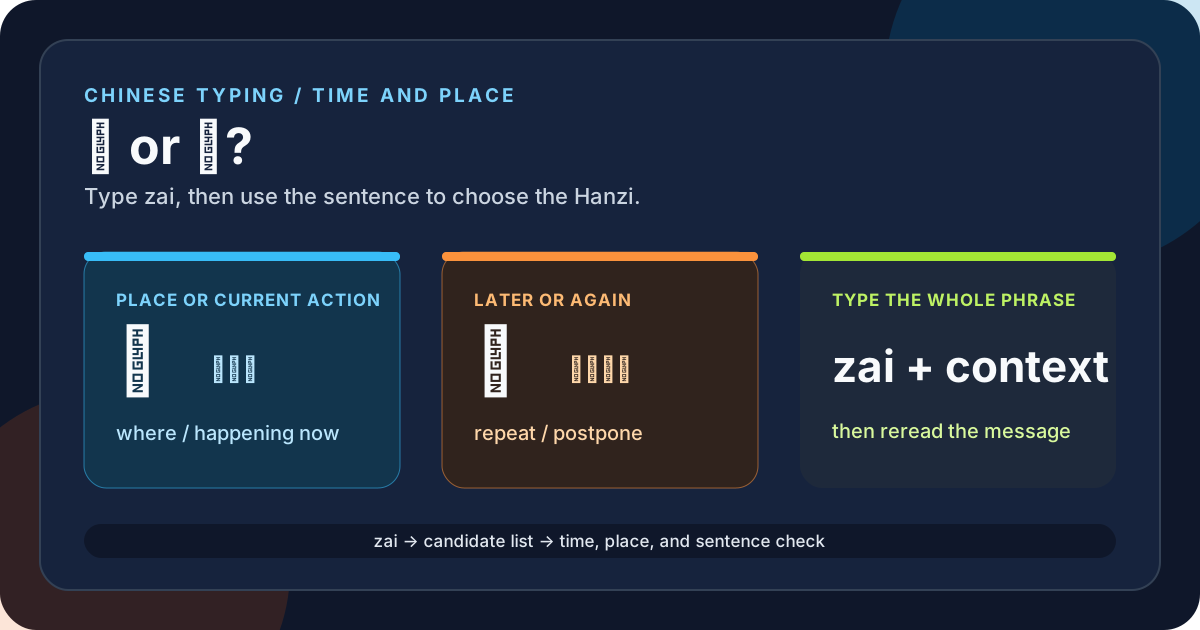
When you type zai in a Chinese Pinyin IME, the candidate list can include 在 and 再. Choose 在 when the sentence gives a place or describes an action in progress: 我在家 (I am at home) and 我在学习 (I am studying). Choose 再 when an action will happen again, later, or in a sequence: 再说一次 (say it one more time) and 明天再聊 (let’s talk tomorrow).
The quickest check is the sentence’s time and role:
- place or action happening now → 在
- another action later or a repeated action → 再
Type enough of the phrase for the IME to see the context, select the Hanzi, and read the whole message before sending it. The two characters share the same Pinyin letters, so pronunciation alone cannot make the choice.
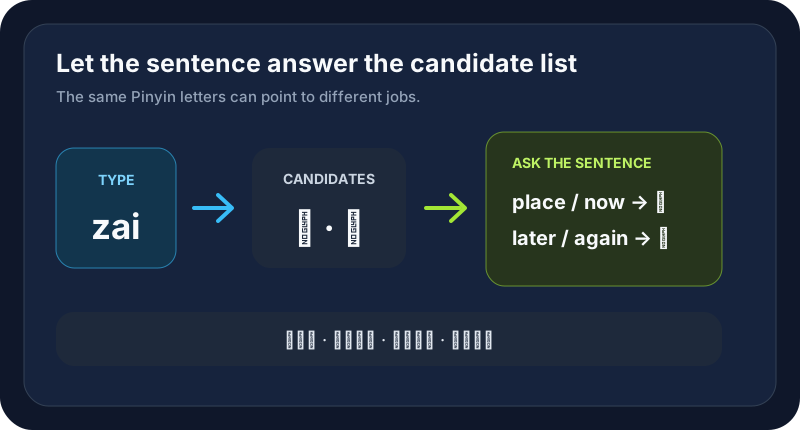
zai, then use the sentence’s place, time, and action to choose 在 or 再.The two jobs to separate first
在 and 再 are both common Hanzi candidates for zai, yet they do different work in ordinary messages. 在 often answers “where?” or marks something that is happening around now. 再 usually points to a later step, another turn, or a repeated action.
| Sentence job | Chinese example | What to type | Candidate to check |
|---|---|---|---|
| Location | 我在家。 | wo zai jia | 在 |
| Action in progress | 我在看书。 | wo zai kan shu | 在 |
| Repeat a request | 请再说一次。 | qing zai shuo yi ci | 再 |
| Postpone an action | 我们明天再聊。 | women mingtian zai liao | 再 |
| Sequence | 先吃饭,再学习。 | xian chi fan zai xuexi | 再 |
This is a learner default for clear sentence writing. Chinese grammar has more uses than this short test covers, and a native message may rely on a fixed word or a larger context. The pattern still gives you a reliable first decision when the candidate window is open.
When to choose 在
A place or state
Use 在 to locate a person or thing:
我在家。: I am at home.书在桌子上。: The book is on the table.他现在在北京。: He is in Beijing now.
Type the place with the Pinyin instead of selecting 在 after one syllable:
wo zai jia → 我在家
If your IME suggests 再 after wo zai, add jia and inspect the complete phrase. A longer input gives the candidate window more information.
An action happening now
在 can sit before a verb to describe an action in progress:
我在吃饭。: I am eating.她在开会。: She is in a meeting.我们在等你。: We are waiting for you.
The exact aspect and tense of a Chinese sentence depend on the full context. For an HSK 2-4 message, the practical clue is that the action is underway when you are writing or describing it. The Chinese Pinyin setup guide covers the device setting if your keyboard remains in English mode, while this article focuses on the character choice inside a working IME.
When to choose 再
Do something again later
Use 再 when an action will happen another time or after a pause:
我们下周再见。: We will meet again next week.你再试一次。: Try one more time.我晚点再回复你。: I will reply later.
In these messages, the action is planned for a later point or the speaker is asking for another attempt. Type the words that establish that time or repetition:
mingtian zai liao→明天再聊zai shi yi ci→再试一次wan dian zai huifu→晚点再回复
The Peking University study on foreign learners’ acquisition of 再 describes 再 as a multi-use adverb that can be difficult for learners to acquire. A typing routine helps because you practise the word inside the sentence where its timing is visible.
Move an action to a later time
再 also works when you postpone something:
今天太忙了,明天再做。这件事我们以后再说。你先休息,再学习。
The sentence shows a sequence: first rest, then study. Read the time or order words around 再 before choosing the candidate.
Treat fixed words as words
Some common expressions should be learned as vocabulary rather than rebuilt character by character:
再见(goodbye)再说(talk about it later, or say it again depending on context)再三(repeatedly)
Type zaijian as a whole and choose 再见. The Chinese typing drills for real messages use the same sentence-first habit for phrases that look easy in isolation and become clearer in a full message.
What about 又?
Learners often compare 再 with 又 because both can relate to repetition. A practical time test is useful:
| Word | Common learner cue | Example |
|---|---|---|
| 再 | The repeated or next action is still ahead | 明天再去。 |
| 又 | The repeated action has already happened or is happening again | 他昨天又迟到了。 |
This is a starting point, not a complete rule for every sentence. The Peking University comparison of 还、再、又 explains that the three adverbs divide repetition and speaker attitude in different ways. A teaching handout from the Confucius Institute and Hanban gives the same useful learner contrast: 又 + V commonly refers to a repeated action that has already happened, while 再 + V commonly refers to one that has not happened yet.
When you are unsure, place the sentence on a simple timeline:
- Is the person or object located somewhere, or is an action happening now? Check 在.
- Is the action planned for later, repeated as a request, or second in an order? Check 再.
- Has the repeated action already happened? Compare 又 before you select.
How to type zai without guessing
Use this loop in a chat box, Notes, or a short practice field:
- Start with the intended meaning. Think “where or now,” “later or again,” or “already repeated.”
- Type the whole phrase. Add the place, time word, verb, or complement that gives the IME context.
- Select the candidate that matches the sentence. Do not accept 在 simply because it appears first.
- Read the complete message. Check the time expression and the action around the character.
- Re-type the corrected sentence once. Keep the right phrase in your memory, not just the wrong candidate you noticed.
For a generic candidate problem, use the Pinyin wrong-character guide. It explains word boundaries, candidate selection, fuzzy Pinyin, and sentence review. The practical difference here is narrow enough to practise with a short set of time and place messages.
A 10-minute practice routine
Type each line from the English prompt, choose the Hanzi, and then read the result aloud:
| Prompt | Target sentence | Pinyin input |
|---|---|---|
| I am at home | 我在家。 | wo zai jia |
| I am studying now | 我在学习。 | wo zai xuexi |
| Please say it again | 请再说一次。 | qing zai shuo yi ci |
| Let’s talk tomorrow | 我们明天再聊。 | women mingtian zai liao |
| First eat, then study | 先吃饭,再学习。 | xian chi fan zai xuexi |
Spend two minutes on location messages. Spend two minutes on actions in progress. Spend three minutes on later or repeated actions. Use the final three minutes to mix the groups without looking at the Chinese column.
Add one sentence with 又:
他昨天又忘了带钥匙。
Then type a future sentence with 再:
他明天再拿。
The pair makes the time difference concrete. Use the Mandarin sentence typing routine when you want to extend the exercise beyond these short contrasts.
Common mistakes
Accepting the first candidate
在 is common, so many IMEs place it near the front for zai. Candidate order is a convenience, not a grammar explanation. Continue typing until the sentence supplies enough context.
Using 在 for every sentence about time
Time words do not automatically select 在. 现在我在家 uses 在 for location, while 明天再聊 uses 再 for a later action. Ask what the character is doing in the sentence.
Using 再 for every English “again”
English “again” can map to 再 or 又 depending on whether the repetition is planned or already happened. Compare 你再说一次 with 你刚才又说了一次. The time and event status change the Chinese choice.
Splitting a fixed expression
Words such as 再见 and 再三 are easier to learn as units. Type the whole word, then read the message around it.
Skipping the final read
我在家 and 我再家 may look close in a candidate window, but they do different jobs. Read the phrase after conversion, especially when the message includes a place or time word.
FAQ
Are 在 and 再 pronounced the same?
They share the Pinyin spelling zài with the fourth tone. The character and sentence role are different, so an IME still needs the surrounding phrase to choose the right candidate.
Is 在 only used for locations?
No. It can introduce a location, and it can appear before a verb to describe an action in progress, as in 我在看书. The complete sentence determines whether you are describing a place or an ongoing action.
Does 再 always mean “again”?
No. 再 can refer to a later time, a postponed action, an additional attempt, or the next step in a sequence. 明天再说 means “talk about it tomorrow,” while 先吃饭,再学习 means “eat first, then study.”
Should I use 又 instead of 再 for “again”?
Use the time line as a first check. 再 commonly points to a repeated action that is still ahead. 又 commonly describes a repeated action that has already occurred or is occurring again. Some sentences need more context, so keep the full clause when you ask for a correction.
Why does zai produce a phrase I did not expect?
The IME may be using its dictionary, previous input, or a short candidate window. Type the place, time word, or verb that belongs in the sentence. Then choose the Hanzi and reread the complete message.
Sources and limits
This guide gives a practical typing default for HSK 2-4 learners. It does not cover every use of 在, 再, or 又, and the short English labels are memory aids rather than full grammar definitions. For deeper reference, read the Peking University study on 再 acquisition, the Peking University comparison of 还、再、又, the Confucius Institute and Hanban teaching handout, and the East China Normal University paper discussing 在 in Chinese grammar.