How to Type Chinese Measure Words in Messages
MandarinReps
9/27/2026
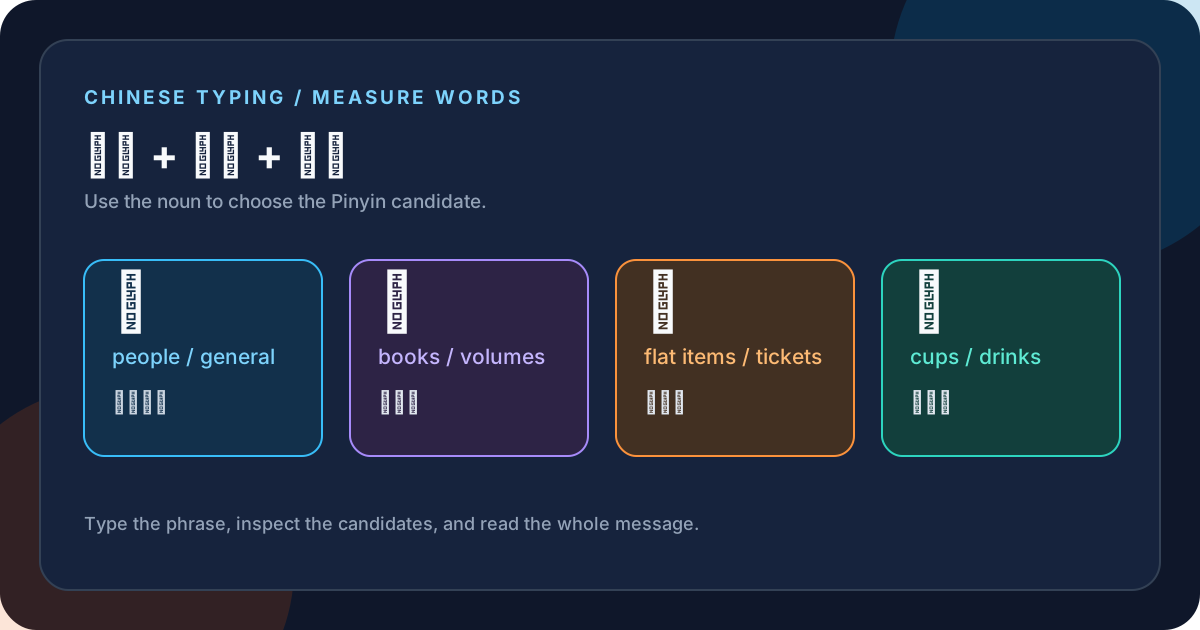
When a Chinese message gives a quantity, the usual pattern is number + measure word + noun: 三个人 (three people), 两本书 (two books), or 一张票 (one ticket). In a Pinyin input method, type the whole short phrase before choosing a candidate, such as san ge ren, liang ben shu, or yi zhang piao.
The noun tells you which measure word to use. 个 works with people and many everyday items, 本 goes with bound books, 张 goes with flat items, and 杯 counts cups or glasses of a drink. You can then check the complete sentence before sending it. This is more reliable than choosing whichever character appears first after ge, ben, or zhang.
The examples cover common HSK 2 to 4 messages. Measure words still have exceptions, so use these patterns as a typing aid.
The sentence frame to remember
Chinese usually places a measure word between a number or demonstrative and the noun:
| English idea | Chinese pattern | Message example |
|---|---|---|
| one person | number + measure word + noun | 一个人 |
| these two books | demonstrative + number + measure word + noun | 这两本书 |
| several tickets | number + measure word + noun | 几张票 |
| this cup of tea | demonstrative + measure word + noun | 这杯茶 |
The frame also follows 几 (how many), 哪 (which), 这, or 那 when you count a noun. Type the phrase as one unit when the IME allows it. zhe liang ben shu gives the keyboard more context than typing each part separately.
For everyday quantities, 两 is a useful default before a measure word: 两个人, 两杯咖啡, and 两张票. 二 still appears in dates, room numbers, serial numbers, and fixed expressions such as 二月.
Four measure words you will use often
个 for people and general items
Use 个 for people and for many everyday things when a more specific measure word is not needed:
一个朋友(one friend)三个问题(three questions)两个苹果(two apples)哪个颜色?(which color?)
Type ge and choose 个 when the sentence needs the general measure word. The IME may also show characters such as 歌, 格, or 各. The candidate list does not know whether you mean “song,” “style,” or “each” until the rest of the sentence gives it information.
个 is useful, but it is not a universal replacement for every measure word. A message such as 三个书 may be understood, yet 三本书 is the normal choice for three books.
本 for books and other bound volumes
Use 本 for books, notebooks, magazines, and similar bound reading materials:
一本书(one book)两本中文书(two Chinese books)这本杂志(this magazine)
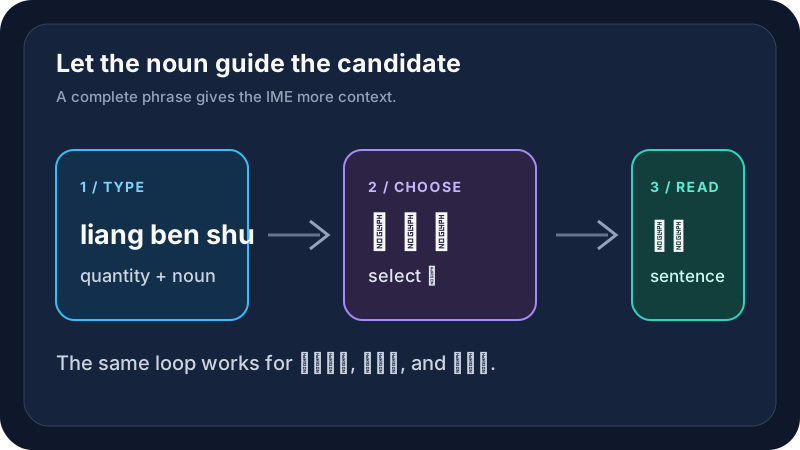
Type ben as part of the phrase. If you type only ben, the first candidate may not be 本, especially when the IME has little context. yi ben shu and liang ben zhongwen shu make the intended word easier to find.
张 for flat items and tickets
Use 张 for many flat or sheet-like objects, including paper, tables, photos, and tickets:
一张纸(one sheet of paper)两张票(two tickets)一张照片(one photo)这张桌子(this table)
Shape is a memory aid, not a rule for every noun. Learn the common phrase as a unit and check a dictionary or teacher when a new noun feels uncertain.
杯 for cups or glasses of a drink
Use 杯 when the quantity refers to a cup or glass of a drink:
一杯水(a cup of water)两杯咖啡(two cups of coffee)你要几杯茶?(how many cups of tea do you want?)
Here 杯 counts the serving: 两杯咖啡 means two servings.
More useful measure words for messages
Once 个, 本, 张, and 杯 feel familiar, add the words that appear in common plans, shopping messages, and work chats.
| Measure word | Common use | Example to type |
|---|---|---|
件 | pieces of clothing or matters | 一件衣服, 一件事 |
条 | messages, news, and some long or narrow things | 一条消息, 两条鱼 |
份 | portions, copies, or documents | 两份报告, 一份炒饭 |
家 | businesses, shops, restaurants, or companies | 一家饭店, 这家公司 |
辆 | cars, buses, bicycles, and other vehicles | 一辆车, 两辆自行车 |
These words make useful phrase drills because one Pinyin syllable can map to several Hanzi. jia can become 家, 加, or 价; fen can produce 份, 分, or 粉. The noun gives you a quick check.
How to choose the right Pinyin candidate
Use this four-step loop when the IME offers several characters:
- Read the English meaning first. Decide whether you are counting a person, a book, a ticket, a serving, or another object.
- Type a longer phrase. Try
liang ben shuinstead of stopping atliang ben. More context usually produces a more useful candidate order. - Choose the word that fits the noun. Select
本for书,张for票, and杯for咖啡in the examples above. - Read the finished message. Check the number, measure word, noun, and punctuation as one sentence.
Apple’s Chinese input method guide describes this candidate-window workflow on Mac. Other Pinyin IMEs use different layouts, but the same habit works on a desktop or phone: type the sound, inspect the candidates, and confirm the phrase in context.
If the IME keeps ranking a surprising character first, the problem may be insufficient context rather than a broken dictionary. The guide on why Pinyin input picks the wrong Chinese character covers word boundaries, candidate selection, and a short recovery loop.
A five-minute measure-word typing drill
Practise complete messages rather than isolated lists. First read the English meaning, then type the Chinese sentence from memory. Select candidates only after the phrase gives you enough context.
| Meaning | Target sentence | Pinyin input |
|---|---|---|
| I have two friends. | 我有两个朋友。 | wo you liang ge pengyou |
| I bought one book. | 我买了一本书。 | wo mai le yi ben shu |
| Do you have two tickets? | 你有两张票吗? | ni you liang zhang piao ma |
| I want a cup of tea. | 我要一杯茶。 | wo yao yi bei cha |
| Please send me one message. | 请发我一条消息。 | qing fa wo yi tiao xiaoxi |
| There are two cars outside. | 外面有两辆车。 | waimian you liang liang che |
Repeat any sentence where you selected the wrong candidate. Then change one detail: 两个朋友 can become 三个朋友, and 一杯茶 can become 两杯咖啡. This makes you retrieve the pattern instead of copying a fixed string.
For more sentence-level drills, use the 20 real-message typing exercises. If your Chinese input source is not converting Pinyin into Hanzi, follow the setup guide for Mac, Windows, iPhone, and Android before practising.
Mistakes worth checking before you send
Leaving out the measure word
English allows “two books” without an extra word. Chinese normally needs 两本书, not 两书, in an ordinary message. After typing a number, ask yourself what noun is being counted and whether it needs a measure word.
Using 个 for every noun
个 is common and useful, but 两本书, 一张票, and 一杯茶 are clearer than replacing all three measure words with 个. Learn the noun together with its frequent measure word.
Selecting a candidate too early
If you choose 家 immediately after typing jia, the next word may reveal that you needed 加 or 价. Type enough of the phrase to make the meaning visible, then review the full sentence.
Counting the object when you mean the serving
一杯咖啡 counts one cup or serving. 一杯 does not mean that the word 杯 belongs with every drink-related sentence. Keep the measure word tied to what the number actually counts.
Limits of this shortcut
Measure words vary by noun, region, formality, and fixed expression. The patterns here cover common HSK 2 to 4 message situations, including people, books, tickets, drinks, messages, documents, businesses, and vehicles. They do not replace a full dictionary entry or a correction from a teacher when a noun is new.
The official HSK syllabus is a useful way to check the level and vocabulary scope of a study plan. The Chinese number and price typing guide can help when the main problem is the number itself rather than the measure word.
FAQ
Do I need a measure word after every number?
You usually need one when a number directly counts a noun: 三个人, 两本书, and 一张票. Dates, clock times, room numbers, phone numbers, and other fixed number expressions follow different patterns. Learn the phrase you need instead of inserting a measure word into every number.
Can I use 个 instead of 本 or 张?
People will often understand 个, and it can work as a general measure word in many contexts. Specific common combinations such as 一本书 and 一张票 sound more natural and give the IME better context. Treat 个 as a useful general option, not a substitute for every classifier.
Why does typing ge show so many Chinese characters?
Pinyin is a sound-based input method, so one syllable can match several characters. The candidate order can change with the phrase and device. Type the noun or more of the sentence, then select 个 only when it fits the meaning. The Pinyin input guide explains why complete sentence output helps this decision.
Should I type tone marks for measure words?
Most everyday Pinyin IMEs accept tone-free keyboard input such as liang ben shu and then show Hanzi candidates. Tone marks may help you study pronunciation, but they are usually not required for ordinary Chinese typing. Check the input method on your device because shortcut behavior can differ.