How to Type 的, 地, and 得 in Chinese Messages
MandarinReps
9/21/2026
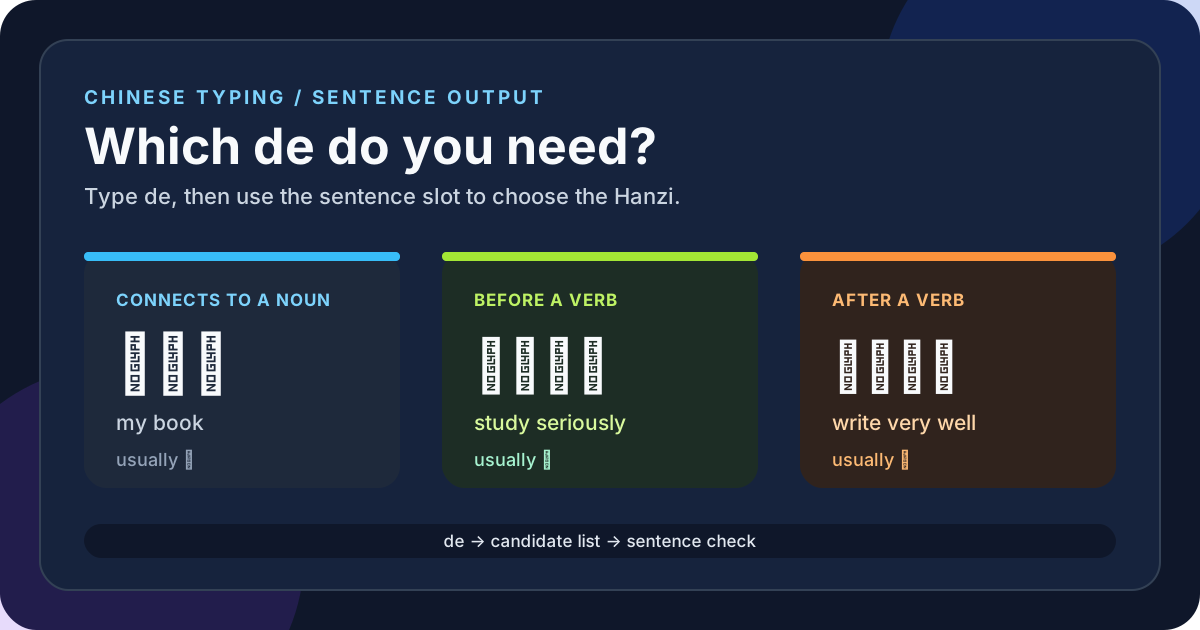
When you type de in a Chinese Pinyin IME, the candidate list may contain 的, 地, and 得. In a sentence, 的 usually connects a modifier or owner to a noun, 地 commonly marks an adverbial before a verb, and 得 follows a verb or adjective before a complement. Type the whole word or phrase before choosing a candidate, then read the complete sentence once.
The patterns look like this:
我的书(my book)认真地学习(study seriously)说得很快(speak very quickly)
These are practical patterns for HSK 2-4 writing. Current Chinese teaching does not require a rigid separation in every informal situation, so use the patterns as a clear default and adjust when a course, editor, or native speaker gives you a specific correction. The Ministry of Education explanation of 的、地、得 gives useful context for that boundary.
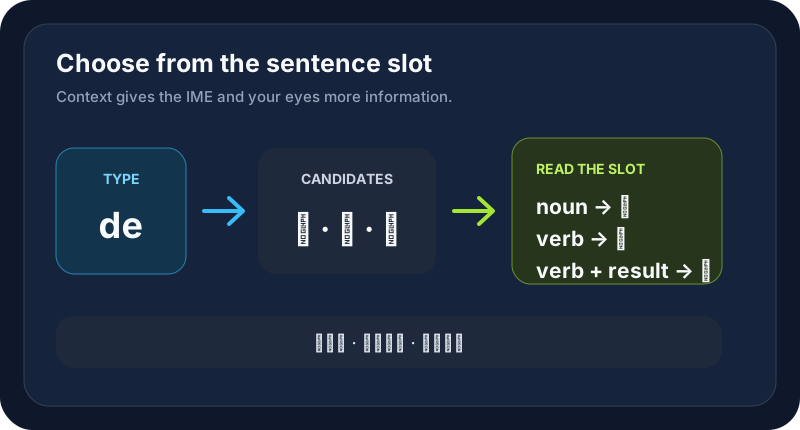
de, inspect the candidates, and use the sentence slot to make the choice.What changes when you type de?
An IME converts Latin letters into Hanzi candidates. It does not know the sentence you intended from the sound alone. The short input de can point to several common characters, and the first candidate can change with the words around it, your dictionary, and your input method.
Give the IME more context:
| Job in the sentence | Chinese pattern | What to type | Candidate to check |
|---|---|---|---|
| Owner or description before a noun | 我的书 | wode shu | 的 |
| Description before an action | 认真地学习 | renzhen de xuexi | 地 |
| Comment after an action | 说得很快 | shuo de hen kuai | 得 |
| Character inside a vocabulary word | 觉得很难 | juede hen nan | 觉得 |
The last row is a vocabulary word. In 觉得, 得 means part of “to feel” or “to think”; it has a different sentence job from the particle in 说得很快. Learn common words such as 觉得, 得到, and 记得 as complete units.
The official GB/T 16159-2012 Chinese Pinyin orthography standard includes examples of structural particles written separately in Pinyin. That convention helps you see a sentence boundary, while the Hanzi candidate still needs to be checked in context.
When to choose 的
Choose 的 when the word or phrase before it describes, identifies, or belongs to the noun after it. Ownership is the easiest pattern:
我的手机: my phone老师的书: the teacher’s book北京的天气: Beijing’s weather
The same character connects a longer description to a noun:
好吃的面: tasty noodles昨天买的书: the book bought yesterday我喜欢的电影: the film I like
For typing practice, enter the whole phrase. wode shouji is more useful than typing wo, selecting 我, then guessing which de belongs in the next slot. If the candidate is wrong, continue with the noun and look at the complete phrase before correcting it.
When to choose 地
Choose 地 when a description tells you how an action happens and it sits before the verb. Common HSK-level examples include:
认真地写: write carefully慢慢地说: speak slowly开心地笑: laugh happily安静地坐着: sit quietly
The pattern is useful for clear learner writing, though everyday messages may omit 地 or use the three characters less consistently. The Ankang municipal government language-processing article discusses 的、地、得 as structural particles in modern Chinese information processing. A practical reading habit is to look at what comes after the candidate. If a verb follows the descriptive phrase, 地 may fit the structure.
Try typing a whole message:
请慢慢地说,我还在学习。
Enter qing manmande shuo first. Read the candidate result before adding the second clause. This gives you a chance to catch 的 or 得 when the sentence needs 地.
When to choose 得
Choose 得 when it follows a verb or adjective and introduces information about degree, manner, result, or ability. The short form is often:
verb + 得 + complement
Examples:
他说得很快。: He speaks very quickly.你写得很好。: You write very well.孩子跑得太快了。: The child runs too fast.这道题做得不错。: This problem was done well.
For the input method, type beyond the single syllable:
shuode hen kuai→说得很快xiede hen hao→写得很好zuode bucuo→做得不错
The position after the verb is the helpful clue. If you are typing 觉得 or 记得, keep the word together in your vocabulary review. The character may look familiar while the grammar is different.
A message-first typing workflow
Use this five-step loop whenever the candidate list feels noisy:
- Identify the slot. Is the phrase describing a noun, describing an action before a verb, or commenting on an action after a verb?
- Type the complete word or short phrase. Include the noun, verb, or complement that gives the IME context.
- Inspect the candidates. Treat the first result as a suggestion and confirm the character you intend to send.
- Read the sentence from the beginning. Check the character together with the words around it.
- Re-type the corrected sentence once. This creates a small retrieval practice instead of a one-off correction.
The process fits the broader advice in the Pinyin wrong-character guide: add context, choose the Hanzi, and check the full sentence. The Chinese Pinyin setup guide covers the device-side issue when the IME stays in English or the candidate window does not appear.
A 10-minute practice routine
Start with three sentence patterns. Type the Chinese sentence from the English prompt, then compare the character in the sentence:
| Prompt | Target sentence | Pinyin input |
|---|---|---|
| my new phone | 我的新手机。 | wode xin shouji |
| please speak slowly | 请慢慢地说。 | qing manmande shuo |
| you write very clearly | 你写得很清楚。 | ni xiede hen qingchu |
Spend two minutes reading the three patterns aloud. Spend four minutes typing each phrase twice, including punctuation. Spend two minutes making one new sentence with each pattern. Use the final two minutes to reread the six sentences and mark any candidate you selected from habit rather than from the sentence.
Then mix in vocabulary words:
我觉得这个方法很方便。我记得他的名字。我得早点回家。
The last sentence uses 得 with a different reading and meaning. It is a useful reminder to learn the whole word or phrase rather than assign one pronunciation to every appearance of a character.
If you want more sentence-level keyboard practice, the real-message Chinese typing drills and the Mandarin sentence typing routine give you longer prompts to convert and review.
Common mistakes
Choosing 的 for every de
的 is common, so it can become an automatic choice. Read the word after it. A noun often points toward 的, a descriptive phrase before a verb may need 地, and a complement after a verb often needs 得.
Selecting after one syllable
Short input creates more candidates. Type wode, manmande, or xiede instead of stopping at de. The full phrase gives you a more useful visual check.
Treating 得 as a particle every time
The particle in 写得好 belongs to a different pattern from the 得 in 觉得, 得到, or 记得. Keep a small word list for these common forms.
Turning a learner rule into a universal law
Usage varies by register, editing standard, and sentence. A 2014 Ministry of Education response explains that current teaching does not require a hard distinction in every case, while distinguishing the characters where possible remains helpful. Use a course or editor’s correction when your writing has a specific context.
FAQ
Are 的, 地, and 得 pronounced the same?
In the common particle uses in this guide, all three are entered as de in an ordinary Pinyin IME and are usually pronounced with a neutral tone. 得 also appears in words with other readings, such as 得到 and 我得走了. The sentence or vocabulary word determines the choice.
Why does my IME put 的 first?
Candidate order depends on frequency, the words already typed, your dictionary, and the input method. The first result is convenient, so it can become a habit. Type enough of the phrase to make the sentence visible, then confirm the Hanzi you mean.
Do I need to type tone marks or tone numbers?
Ordinary Chinese Pinyin input usually works with plain Latin letters and candidate selection. Use wode, renzhende, and shuode for the examples here. Tone-marked Pinyin remains useful for pronunciation study, but the keyboard conversion step usually uses letters without tone marks.
Is 地 required before every verb?
No. The sentence structure and writing context decide whether 地 belongs there. In ordinary messages, writers may leave it out or follow a different house style. For HSK practice, use it in clear adverbial patterns such as 认真地学习, then learn the conventions your class or editor expects.
What is the fastest way to remember the three?
Use a sentence position mnemonic: 的 reaches forward to a noun, 地 leads into an action, and 得 follows an action before its description. Then type one complete sentence for each pattern. The act of selecting and rereading is more reliable than memorising three isolated translations.
Sources and limits
This guide gives a practical learner default, not a complete account of Chinese grammar or editorial style. For reference, compare the Ministry of Education Q&A on 的、地、得, the official GB/T 16159-2012 Pinyin orthography PDF, the Ankang government language-processing note, and the Shandong University of Finance and Economics journal article on 的、地、得. These sources support the distinction and its limits; they do not turn a short typing guide into a universal rule for every style of Chinese.